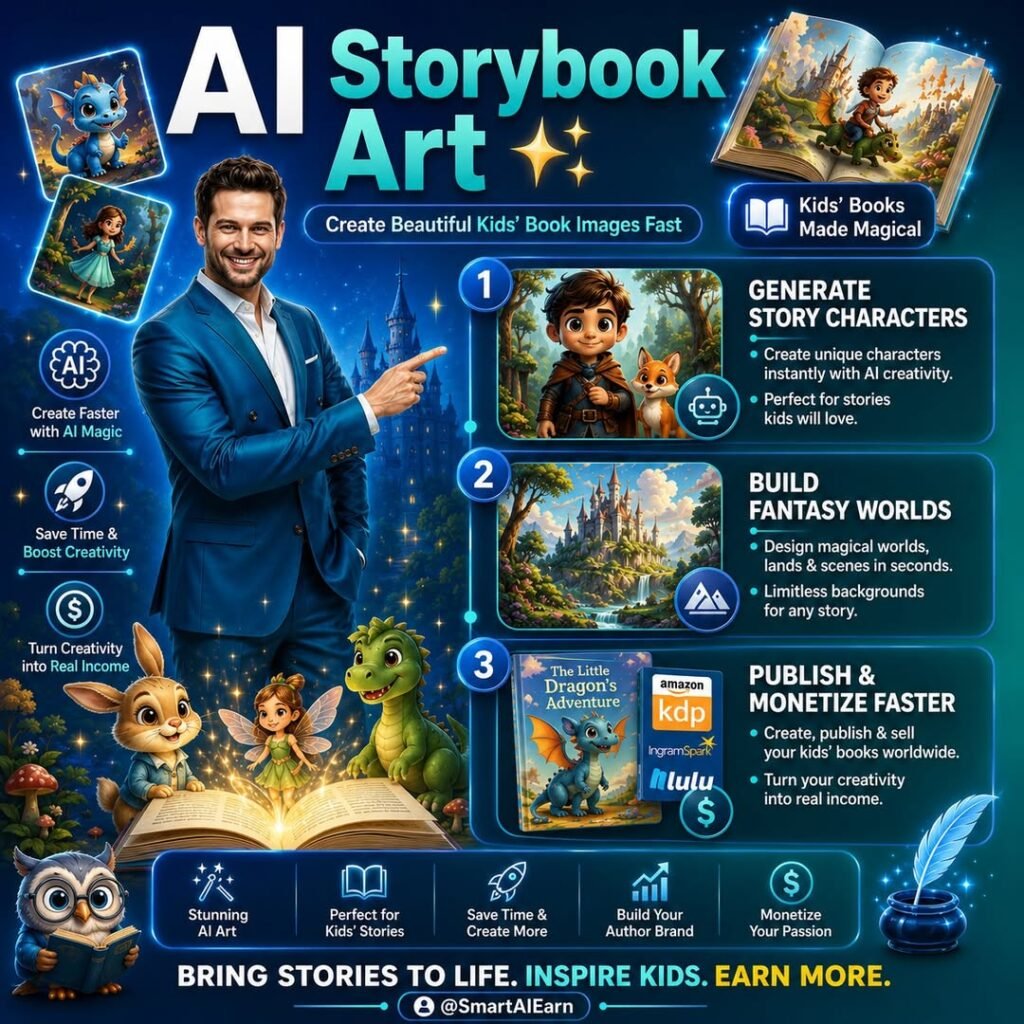
Did you know that nearly 70% of aspiring authors abandon their projects simply because they cannot find affordable visual assets? The barrier to entry for publishing has finally crumbled. Today, AI Storybook Art | Create Kids’ Book Images Fast is no longer a dream but a reality for everyone.
Modern technology allows you to produce professional-grade visuals without needing years of formal training. By utilizing a fast ai illustration tool, you can transform your unique narrative concepts into vibrant, high-quality pages in mere minutes. This shift empowers writers to maintain full creative control over their projects.
Mastering ai storybook art provides a competitive edge in the crowded digital marketplace. Whether you are a seasoned writer or a first-time storyteller, these digital solutions streamline your workflow significantly. Embrace this new era of production to bring your characters to life with ease and precision.
Key Takeaways
- Traditional illustration costs are no longer a barrier for independent authors.
- Modern software allows for rapid production of high-quality visual content.
- You do not need formal artistic training to produce professional results.
- Digital tools provide total creative freedom over your character designs.
- Streamlining your workflow helps you reach your publishing goals sooner.
The Rise of AI in Children’s Literature
Independent authors are finding that the barriers to creating beautiful picture books are finally crumbling away. The publishing industry is currently experiencing a massive shift as digital tools become more accessible to everyone. This evolution allows creators to bypass traditional gatekeepers and bring their unique stories directly to their readers.
Changing the Landscape of Publishing
For years, the path to publishing a children’s book was often blocked by high costs and long production timelines. Today, ai storybook art is democratizing the creative process by providing high-quality visual assets at a fraction of the traditional price. This shift empowers writers to maintain full creative control over their projects from start to finish.
By leveraging these modern tools, authors can now produce professional-grade illustrations without needing a massive budget or a large team. This newfound freedom means that more diverse and imaginative stories can reach the market than ever before. It is truly an exciting time for independent storytelling.
Why Authors are Turning to AI Tools
Many writers are choosing to integrate these technologies to save significant time on manual illustration tasks. Instead of spending months on sketches, they can use ai storybook art to generate concepts and refine their vision in just a few days. This efficiency allows authors to focus more on their narrative arcs and character development.
The ability to iterate quickly is a major advantage for those working on tight schedules. By using these tools, creators can experiment with different styles and color palettes until they find the perfect match for their story. Ultimately, adopting these solutions helps authors stay competitive in an ever-evolving children’s book market.
Understanding AI Storybook Art and Its Benefits
The barrier to entry for publishing a beautiful children’s book is lower than ever before. Authors no longer need to spend months searching for the perfect artist or waiting for sketches to arrive. By leveraging modern technology, you can create children’s book illustrations that capture the imagination of young readers instantly.
Speeding Up the Creative Workflow
Traditional illustration processes often involve long feedback loops and complex communication with hired artists. When you use a fast ai illustration tool, you regain control over your timeline. Platforms like BookBildr allow you to generate unique art using AI technology or select from high-quality, ready-made graphics to fill your pages.
This streamlined approach means you spend less time on technical hurdles and more time refining your plot. You can iterate on character designs in minutes rather than days. This agility is a game-changer for writers who want to maintain momentum throughout their project.
“Creativity is intelligence having fun, and modern tools allow that fun to happen at the speed of thought.”
Cost-Effective Solutions for Independent Authors
Budget constraints often prevent talented writers from sharing their stories with the world. Hiring a professional illustrator can cost thousands of dollars, which is often out of reach for new authors. Utilizing a fast ai illustration tool provides a professional-grade alternative that fits almost any budget.
By managing the visual production yourself, you save significant resources that can be reinvested into marketing or distribution. You can now produce work that competes with major publishing houses without the heavy financial burden. The following table highlights the key differences between traditional and AI-assisted workflows.
| Feature | Traditional Illustration | AI-Assisted Workflow |
|---|---|---|
| Production Time | Weeks to Months | Hours to Days |
| Cost | High (Per Illustration) | Low (Subscription/Credit) |
| Control | Limited by Artist Availability | Full Creative Autonomy |
| Revisions | Slow and Costly | Instant and Free |
Ultimately, the goal is to create children’s book illustrations that resonate with your audience while keeping your process sustainable. Embracing these tools empowers you to focus on what truly matters: the heart of your story.
Choosing the Right AI Tools for Illustration
If you want to create children’s book illustrations that stand out, you must first understand the software landscape. Selecting the appropriate platform is a critical step in your journey toward producing professional-grade books. Whether you are a beginner or a seasoned artist, the right tool will help you bring your unique vision to life.
Midjourney for Artistic Versatility
Midjourney is widely recognized for its incredible artistic range and high-quality output. It excels at creating complex, painterly styles that are perfect for whimsical storybooks. Many authors choose this platform because it offers the flexibility needed to create children’s book illustrations with a distinct, hand-drawn feel.
DALL-E 3 for Ease of Use
If you prefer a user-friendly experience, DALL-E 3 is an excellent choice. It integrates directly with chat interfaces, allowing you to refine your images through simple conversation. This tool is perfect for those who want to focus on storytelling rather than complex technical settings.
For those looking for an all-in-one solution, Pixelcut provides a robust suite of tools. Their platform includes an AI Illustration Generator, a Fairy Tale Art Generator, and a Book Mockup Generator. These features make it easier to manage your entire project in one place.
Stable Diffusion for Advanced Control
Stable Diffusion is the go-to option for creators who demand total control over every pixel. It allows for deep customization, including the use of custom models and specific character references. This level of precision is vital when you need to create children’s book illustrations that maintain strict visual consistency across dozens of pages.
Ultimately, your choice depends on your technical comfort and your specific artistic goals. By testing these platforms, you will find the perfect partner to help you create children’s book illustrations that capture the hearts of your young readers.
Preparing Your Storyboard and Character Concepts
Creating a successful picture book begins long before you open an AI tool. Many authors jump straight into image generation, but this often leads to disjointed results. By taking the time to map out your vision, you ensure that your ai generated kids’ book images tell a cohesive story from start to finish.
Drafting Your Narrative Arc
A strong narrative arc acts as the skeleton for your entire project. You should break your story down into individual scenes, identifying the key emotional beats that require a visual representation. This process helps you determine exactly how many illustrations you need and what action should occur in each frame.
“A story is a promise made to the reader, and every image you create must keep that promise.”
When you outline your scenes, consider the pacing of your book. Visual storytelling relies on the balance between action-packed pages and quiet, reflective moments. Organizing these beats early allows you to produce ai children’s book images that feel intentional rather than random.
Defining Your Visual Style and Color Palette
Consistency is the hallmark of a professional publication. Before you begin, decide on a specific art style, such as watercolor, 3D render, or flat vector illustration. Sticking to one aesthetic ensures that your ai generated kids’ book images look like they belong in the same universe.
You should also establish a defined color palette to maintain a unified mood throughout the book. Consider these tips for visual harmony:
- Select a primary color scheme that reflects the tone of your story.
- Use consistent lighting effects to ground your characters in their environments.
- Create a reference sheet for your main characters to keep their features stable.
By defining these elements early, you simplify the production process significantly. This preparation is the key to creating high-quality ai children’s book images that resonate with young readers and stand out in a crowded market.
Mastering Prompt Engineering for Consistent Characters
Achieving consistent character designs requires a strategic approach to how you structure your instructions. When you learn to speak the language of your AI model, you gain the power to produce high-quality, professional illustrations that truly stand out. This skill is the foundation for creating beautiful, cohesive ai generated kids’ book images that young readers will love.
The Anatomy of a Perfect Prompt
A perfect prompt is more than just a simple description of a character. It acts as a detailed blueprint that tells the AI exactly what to render, including lighting, artistic style, and camera angles. Descriptive language is your best friend here; instead of saying “a happy dog,” try “a cheerful golden retriever with fluffy fur, wearing a red scarf, soft cinematic lighting, watercolor illustration style.”
By layering these specific details, you guide the model toward your unique vision. This level of precision ensures that your ai generated kids’ book images maintain a professional look across every single page of your story.
Techniques for Character Reference
Maintaining the same protagonist throughout a book is often the biggest hurdle for new creators. To solve this, you should utilize character reference features or consistent seed numbers provided by your chosen AI tool. These tools allow the software to remember the specific features, clothing, and proportions of your character.
You can also create a master reference sheet that includes your character from multiple angles. By uploading this sheet as a reference, you ensure that your ai generated kids’ book images remain consistent, even when the character is in different poses or environments. Consistent practice with these techniques will eventually make your creative workflow feel like second nature.
How to Create Kids’ Book Images Fast and Easy
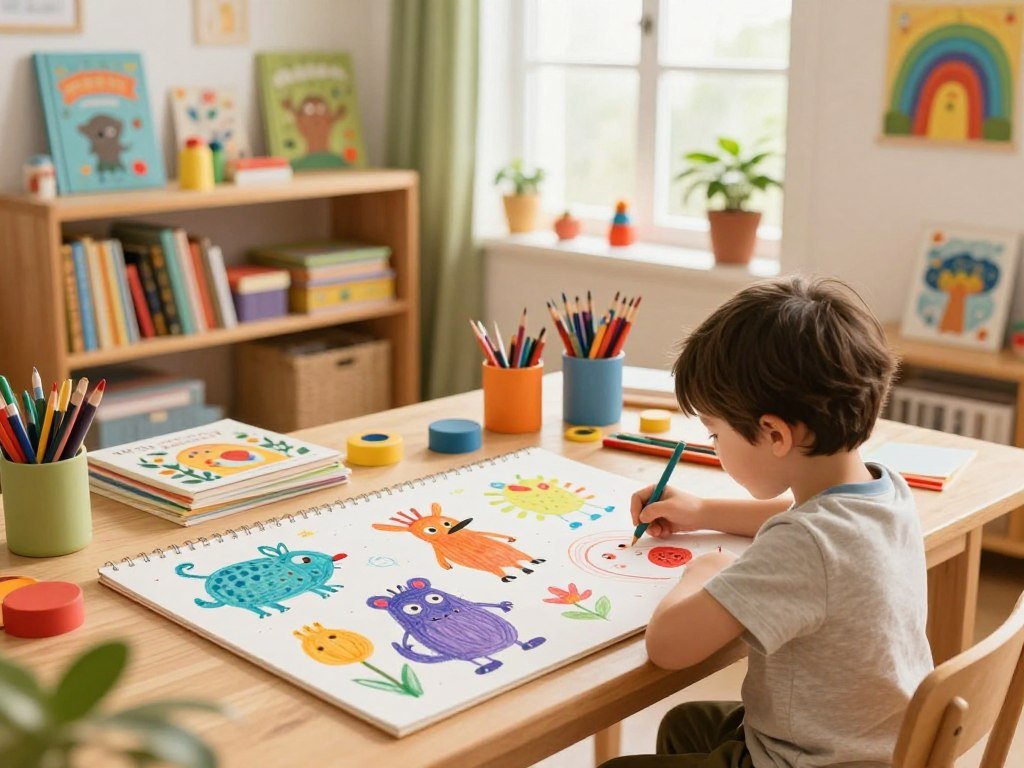
Modern technology has revolutionized digital storytelling for kids, making it possible for anyone to produce professional-grade illustrations. By leveraging advanced AI platforms, you can bypass the traditional, time-consuming hurdles of manual sketching and layout design.
Most intuitive tools now feature a simple “Create” button that acts as your primary gateway to creativity. By entering a short, descriptive prompt, you allow the software to interpret your vision and generate a base concept instantly.
Step One: Generating Initial Sketches
The first phase involves turning your abstract ideas into concrete visual drafts. You should provide the AI with specific details regarding character appearance, setting, and the overall mood of the scene.
- Keep your initial descriptions concise to allow the AI room for creative interpretation.
- Focus on the core action of the scene rather than overwhelming the generator with too many variables.
- Review the output to see if the emotional tone matches your narrative goals.
Step Two: Iterating on Composition
Once you have a base sketch, the next step is to refine the layout to ensure it serves your story effectively. You might find that the character placement or the background elements need slight adjustments to improve the flow of the page.
Use the iteration features to tweak specific areas of the image without losing the original character design. This process ensures that your ai children’s book images remain consistent while improving the visual impact of each spread.
Step Three: Upscaling for High-Resolution Prints
After you are satisfied with the composition, you must prepare the file for professional output. High-resolution printing requires a significant increase in pixel density to avoid blurriness or pixelation in your final book.
Most platforms offer an upscaling feature that enhances the sharpness and detail of your work. Always verify that your final files meet the standard 300 DPI requirement for high-quality physical distribution.
Refining and Editing AI-Generated Illustrations
Even the most impressive AI-generated images often require a final polish to meet professional standards. While modern tools are powerful, they occasionally produce minor errors that need a human touch. By mastering specific editing techniques, you can ensure your visuals are perfect for digital storytelling for kids.
Using Inpainting to Fix Details
The Masking Feature is your best friend when it comes to advanced editing. This tool allows you to isolate specific areas of an illustration that need improvement without changing the entire image. Whether you need to fix a character’s expression or adjust a small background element, masking provides the precision you need.
“The details are not the details. They make the design.”
Removing Unwanted Elements
AI models sometimes include extra artifacts or stray objects that distract from your narrative. You can easily remove these unwanted elements by using the same masking tools to regenerate or “fill” those specific spots. This process ensures that your final output remains clean and professional, keeping the focus entirely on your story.
Adding Text and Typography
Effective digital storytelling for kids relies heavily on the harmony between art and text. Once your illustrations are polished, you should integrate typography that complements the mood of your book. Choosing the right font style and size is vital for readability and engagement, especially for younger readers who are just beginning to explore books.
Remember that your text should never compete with the artwork for attention. Instead, use clear, legible fonts that enhance the overall experience of your digital storytelling for kids. By balancing these elements, you create a cohesive and immersive world that children will love to explore.
Maintaining Visual Consistency Across Your Book
When you create kids’ book illustrations quickly, the biggest challenge is often keeping your characters looking the same from page to page. Readers expect a seamless experience where the protagonist remains recognizable throughout the entire narrative. Without a plan, your AI might produce slightly different versions of your hero, which can confuse young readers.
Creating a Style Guide for Your AI
A style guide acts as your creative compass. You should document specific details like color palettes, line weights, and artistic influences. By feeding these consistent parameters into your AI prompts, you ensure that every image feels like it belongs in the same world.
Think of this guide as a set of rules for your digital artist. If your character wears a bright red hat, make sure that color code is noted in every prompt. Consistency is the hallmark of a professional children’s book, and it starts with these clear, written instructions.
“Visual consistency is not just about repetition; it is about building a believable world that invites the reader to stay a while.”
Managing Backgrounds and Environments
Backgrounds often change, but the style must remain steady. To keep your scenes grounded, try using a consistent “base prompt” that describes the overall environment style. This helps you produce automated kids’ book artwork that feels cohesive even when the setting shifts from a forest to a bedroom.
You can also use reference images to lock in the look of your locations. By keeping your lighting and perspective consistent, you create a sense of place that feels real. Small details, like the texture of the grass or the style of the furniture, should be repeated across different scenes to maintain unity.
| Strategy | Benefit | Difficulty |
|---|---|---|
| Style Guides | High uniformity | Low |
| Reference Images | Precise character match | Medium |
| Prompt Templates | Fast production | Low |
The Importance of Iterative Testing
Never assume your first generation is perfect. Iterative testing allows you to tweak your prompts until the output matches your vision exactly. By testing different variations early on, you save time during the final production phase.
This process helps you identify which prompts work best for specific character poses or expressions. Prioritizing testing ensures that your final illustrations are high-quality and ready for publication. Remember, the goal is to keep your readers engaged with a story that looks as good as it reads.
Formatting Your Art for Print and Digital Publishing
Mastering the technical side of publishing ensures your hard work looks perfect on the shelf. While the creative process is rewarding, the final stage requires precision to guarantee that your automated kids’ book artwork translates beautifully from your screen to the printed page.
Preparing Files for Amazon KDP
Amazon KDP remains the most popular platform for independent authors. To succeed, you must ensure your files meet their specific PDF requirements, including high-resolution settings of at least 300 DPI.
Always double-check your color profiles. Converting your images to CMYK is essential for accurate color reproduction in print, as digital RGB colors can often appear dull or shifted once ink hits paper.
“Quality is not an act, it is a habit.”
Understanding Bleed and Trim Requirements
Bleed refers to the area beyond the edge of your page that will be trimmed off during the binding process. Setting this correctly prevents unsightly white borders from appearing on your finished pages.
It is helpful to know that services like BookBildr print in the USA, Canada, UK, Australia, and the EU, offering various sizes and shapes to suit your needs. Always verify the specific trim size requirements for your chosen region to ensure your automated kids’ book artwork fits perfectly within the margins.
Exporting for E-book Formats
When preparing for digital readers, the focus shifts from physical dimensions to file size and compatibility. E-books often require fixed-layout EPUB files to maintain the integrity of your illustrations.
Consider these best practices for digital exports:
- Keep file sizes manageable to ensure quick loading times.
- Use high-quality JPEG or PNG formats for optimal clarity.
- Test your files on multiple devices to ensure the layout remains consistent.
Ethical Considerations and Copyright in AI Art
As you explore new ways to create, understanding the ethical side of AI art becomes essential for every modern author. While technology offers incredible speed, it also introduces complex questions about ownership and creative rights. Balancing these tools with personal integrity ensures your work remains respected in the publishing community.
Navigating Current Copyright Laws
Current legal frameworks regarding AI-generated content are still evolving. In the United States, the Copyright Office generally requires human authorship for a work to receive full protection. This means that purely AI-generated images may not qualify for the same copyright status as traditional art.
To produce efficient children’s book illustrations, you should focus on adding significant human input. By layering your own edits, compositions, and creative choices over AI outputs, you strengthen your claim to the final product. Always consult with legal professionals if you have specific concerns about your intellectual property.
Transparency in AI-Assisted Publishing
Honesty with your readers is a cornerstone of building a loyal audience. Many authors choose to include a disclosure statement in their books, acknowledging the use of AI tools in the creative process. This transparency fosters trust and shows that you value the craft of storytelling.
When you create kids’ book illustrations quickly, you are still the director of the vision. Being open about your workflow does not diminish the value of your story. Instead, it highlights your ability to adapt to modern tools while maintaining a clear, human-led narrative.
Respecting Original Artist Styles
The ability to mimic specific artistic styles is a powerful feature of AI, but it must be used with caution. You should avoid prompts that explicitly target the work of living artists without permission. Respecting the hard work of others is vital for maintaining a healthy creative ecosystem.
Focus on developing a unique visual identity that reflects your own voice. By combining AI efficiency with your original concepts, you can build a brand that stands out. The following table outlines best practices for maintaining ethical standards in your publishing journey.
| Practice | Ethical Approach | Why It Matters |
|---|---|---|
| Copyright | Add human creative input | Ensures legal protection |
| Transparency | Disclose AI usage | Builds reader trust |
| Style Usage | Use generic descriptors | Respects original artists |
| Workflow | Iterative human editing | Maintains high quality |
Conclusion
Modern technology offers incredible potential for authors who want to share their stories with the world. You now possess the tools to transform simple ideas into vibrant visual narratives that resonate with young readers.
Mastering these digital platforms allows you to produce efficient children’s book illustrations that capture the imagination. By blending your unique storytelling voice with advanced software like Midjourney or DALL-E 3, you create a distinct path in the publishing industry.
Your creative journey starts with a single prompt and a clear vision. Focus on building a consistent style that reflects the heart of your narrative. This dedication to quality ensures your work stands out on digital shelves and in print.
Embrace the speed and flexibility that these modern tools provide for your projects. Developing efficient children’s book illustrations is now more accessible than ever for independent creators. Start your next project today and watch your characters come to life on the page.
FAQ
What exactly is ai storybook art, and how can it benefit independent authors?
Which platforms are considered the best fast ai illustration tool for beginners?
How do I ensure my ai generated kids’ book images look consistent throughout the story?
Can I edit my ai children’s book images if they aren’t perfect on the first try?
What are the technical requirements for publishing my book on Amazon KDP?
Is it legal to use AI to create children’s book illustrations for commercial sale?
Build Smarter Content Systems with Practical Mini-Guides
Short, actionable digital guides designed to help creators, bloggers, affiliate marketers, and online business owners learn faster, take action sooner, and grow with more clarity.
Pinterest Excellence Playbook
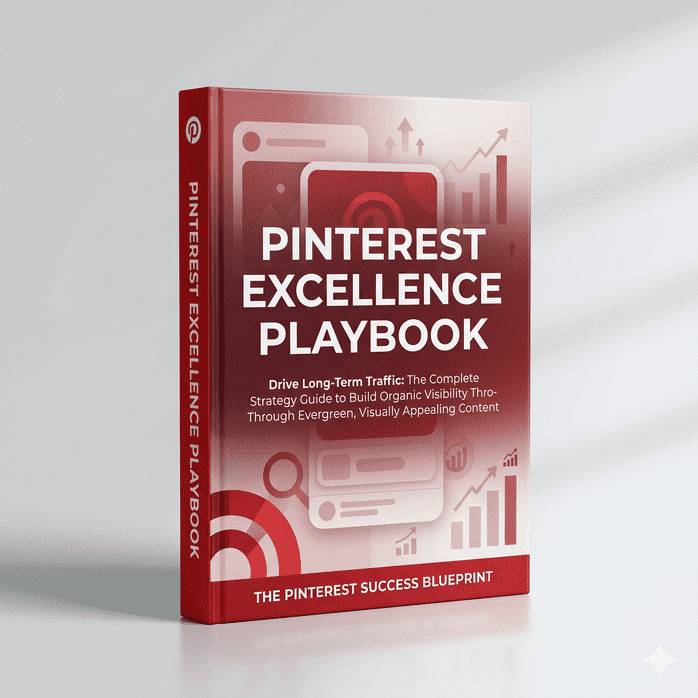
Evergreen traffic + Pinterest SEO. A practical Pinterest growth blueprint covering platform positioning, profile SEO, branding consistency, content planning, pin design, publishing cadence, analytics, monetization, and weekly execution.
View Guide
Google Web Story Excellence Playbook
Visual SEO + mobile traffic. A complete mini guide for planning, designing, optimizing, publishing, and monetizing Google Web Stories that can rank in Search and Google Discover.
View Guide
YouTube Excellence Playbook
Channel growth + SEO system. A practical YouTube growth blueprint covering channel strategy, branding, content planning, YouTube SEO, asset dimensions, analytics, engagement, technical quality, monetization, safety, and weekly workflow.
View Guide
Instagram Excellence Playbook
Profile growth + engagement. A complete Instagram growth blueprint covering profile optimization, content strategy, posting system, SEO, engagement, and monetization.
View Guide
Facebook Excellence Playbook
Reach + content strategy. A complete Facebook growth blueprint covering page positioning, branding, content planning, posting strategy, SEO, analytics, engagement, monetization, and compliance.
View Guide🚀 Want More Practical Digital Resources?
Explore SmartResourceVault for AI prompts, templates, planners, trackers, mini-guides, audio resources, and bundles built for faster execution and everyday growth.
📘 Browse Mini Guides »💼 Build Your AI-Powered Income
Turn your ideas into income with these bestselling guides:


🌟 Ready to Build Your AI Income Stream?
You’ve learned the tools — now master the strategies!
Explore our exclusive AI Side Hustle & Passive Income eBooks to start earning smarter with ChatGPT, Canva, and automation tools.