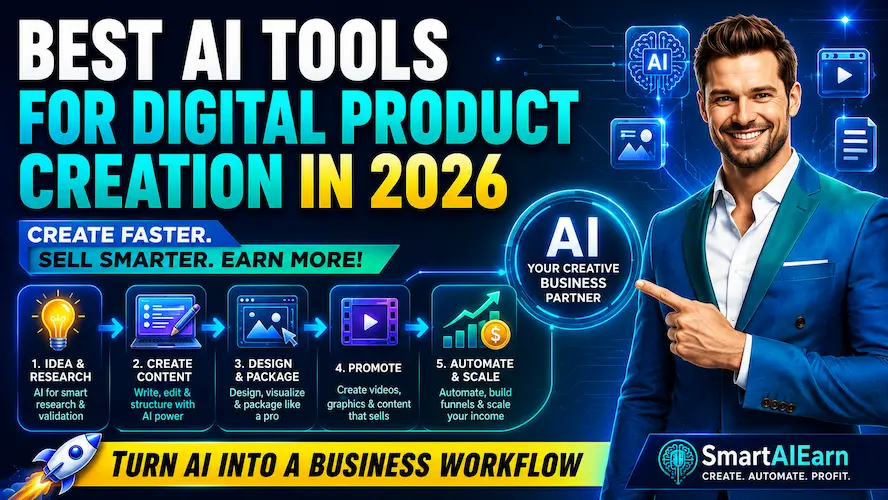
Did you know that 70% of successful startups now launch their initial versions in under three months? This rapid pace is no longer a luxury; it is the new standard. As we navigate 2026, founders and designers are leveraging advanced software to bridge the gap between a raw concept and a market-ready launch.
This guide serves as your practical, workflow-based roadmap. We explore how modern systems accelerate research, ideation, and prototyping. These resources help you refine your vision without ever replacing your human judgment.
Success comes from moving beyond isolated apps. Instead, you should build a connected workflow that carries your project from the first customer problem to final validation. By integrating these solutions, you can focus on strategy while the heavy lifting happens in the background.
Key Takeaways
- Accelerate your development cycle from months to weeks.
- Focus on human-led strategy while automating repetitive tasks.
- Build a cohesive workflow rather than relying on disconnected apps.
- Validate your ideas faster using data-driven insights.
- Maintain high quality across design, testing, and promotion phases.
Define the Digital Product You Want to Create
Success in the digital marketplace begins long before you open an AI interface; it starts with a well-defined strategy. Many creators make the mistake of jumping into ai-powered digital product creation tools without a clear roadmap. By establishing your goals early, you ensure that your final output truly solves a problem for your audience.
Step 1: Choose the product format and customer outcome
First, identify the specific format that best serves your user’s needs. Whether you are building online courses, Notion templates, membership sites, or mobile applications, the format dictates the development path. You must clearly define the transformation you want your customer to experience after using your product.
“Strategy is about making choices, trade-offs; it’s about deliberately choosing to be different.”
Consider these common formats when planning your project:
- Educational Content: Courses or e-books that solve specific knowledge gaps.
- Digital Assets: Templates or design kits that save users time.
- Software Solutions: Web or mobile apps that automate complex tasks.
Step 2: Set measurable project constraints
Once you have a vision, you must ground it in reality. Using ai-powered digital product creation tools can sometimes lead to “feature creep,” where you add too many unnecessary elements. To prevent this, document your project scope, budget, and timeline before you begin.
Set clear success criteria to keep your development focused. By defining your technical limits and quality standards upfront, you ensure that your AI-generated ideas remain practical. This disciplined approach transforms abstract concepts into a high-quality product that is ready for the market.
Build an AI-Assisted Product Creation Workflow
A well-mapped workflow acts as the backbone for every successful digital product launch. By utilizing artificial intelligence tools for product development, you can transform complex tasks into a series of manageable, repeatable steps. This approach ensures that your creative energy remains focused on high-level strategy rather than repetitive manual labor.
Step 3: Map the product workflow from research to iteration
Every stage of your project should follow a clear logic: input, AI-assisted task, human review, and output. Start by defining the specific data needed for each phase, such as market research or user feedback. Consistency is key when you integrate artificial intelligence tools for product development into your daily operations.
Once the AI generates a draft or analysis, you must perform a human review to ensure accuracy and brand alignment. This final output then serves as the input for the next stage of your development cycle. This loop creates a seamless transition between research, design, and final production.

Step 4: Create a centralized project workspace
A scattered project leads to confusion and lost time. You should build a single, centralized hub that houses your product brief, research notes, and prompt library. Having all your requirements and brand rules in one place allows you to maintain total control over your project’s evolution.
Your workspace should also track version history and team feedback to keep everyone on the same page. By organizing your assets effectively, you leverage artificial intelligence tools for product development to maintain a clear record of every decision made. This structure ensures that your team can iterate quickly without losing sight of the original product vision.
Use AI Tools for Digital Product Creation Research and Validation
Modern digital product creation software has transformed how creators approach market research. Instead of guessing what users want, you can now leverage advanced AI to uncover hidden pain points and specific desires.
By combining the right tools, you can move from a rough concept to a data-backed strategy in record time. This proactive approach ensures that your final product solves a real problem for a hungry audience.
Step 5: Research customer needs with Perplexity and ChatGPT
Start your journey by using Perplexity to scan the live web for current market trends and competitor offerings. Perplexity excels at providing source-backed insights, which helps you identify what existing solutions are missing.
Once you have gathered raw data, feed it into ChatGPT to synthesize the information. Ask the AI to classify recurring needs, common objections, and the specific language your target customers use to describe their frustrations.
Step 6: Analyze reviews, interviews, and community discussions
Deep research requires looking at where your audience hangs out, such as Reddit, niche forums, or product review sites. You can export these discussions and use AI to identify patterns in user sentiment.
Look for the “gap” between what customers want and what current digital product creation software provides. By mapping out these desired outcomes, you gain a clear advantage over competitors who rely on intuition alone.
Step 7: Validate demand before investing in production
Never commit significant time or money until you have proof that people are willing to pay for your solution. Validation is the most critical phase of the development lifecycle.
Consider setting up a simple landing page to collect email addresses or running a small paid ad experiment to gauge interest. You might also conduct short interviews with potential users to confirm that your proposed features align with their actual needs.
Pre-orders or waitlists serve as excellent indicators of market demand. If you cannot generate interest at the concept stage, it is better to pivot early rather than building a product that nobody wants.
Turn Product Ideas into Clear Specifications
You can bridge the gap between a simple idea and a finished product by using AI to draft clear specifications. Moving from raw market research to a structured plan is the most critical phase of development. Utilizing the best ai tools for creating digital products allows you to turn validated problems into focused, actionable concepts.

Step 8: Generate and refine product concepts
Start by asking your AI assistant to brainstorm multiple versions of your product idea. You should challenge the model to expose hidden assumptions and compare potential tradeoffs between different features. This process helps you filter out weak ideas before you commit significant time or resources to them.
Step 9: Write a product requirements document
A solid Product Requirements Document (PRD) acts as the blueprint for your entire project. Ensure your document covers essential elements like target users, specific jobs to be done, and core features. You must also include user stories, acceptance criteria, potential risks, and a list of out-of-scope items to keep the project on track.
Step 10: Create a practical AI prompt system
Stop relying on vague, one-line requests that yield generic results. Instead, build a robust prompt system that includes clear role instructions, project context, and specific source materials. Your prompts should define the desired output format and include built-in quality checks to ensure the AI remains focused on your goals.
By providing the AI with clarifying questions, you encourage the model to think critically about your requirements. This structured approach is one of the best ai tools for creating digital products because it ensures consistency throughout the design and development lifecycle. Precision in your inputs will always lead to higher quality outputs for your final product.
Design the Product Experience with AI-Powered Creative Tools
Building a cohesive product experience relies on choosing the best ai-powered digital product creation tools for your specific needs. When you integrate these technologies into your workflow, you bridge the gap between abstract ideas and polished, user-friendly interfaces. This phase is where your product truly begins to take shape for the end user.
Step 11: Generate interface concepts in Figma AI
Figma AI serves as a powerful partner for rapid interface exploration. You can use it to generate layout variations while maintaining your established design system and component libraries. Consistency is key, so ensure that AI-generated suggestions align with your existing typography and color palettes to keep the user experience intuitive.
Beyond aesthetics, always prioritize accessibility during the generation process. Use AI to check contrast ratios and touch target sizes early in the design phase. This proactive approach saves time during the final quality assurance stages.
Step 12: Create visual assets with Adobe Firefly, Midjourney, and Canva Magic Studio
Selecting the right software depends on your specific visual requirements. Adobe Firefly is excellent for generating high-quality, commercially safe imagery that integrates seamlessly into professional workflows. Midjourney offers unparalleled artistic flair for unique illustrations and mood boards, while Canva Magic Studio excels at creating social assets and quick marketing graphics.
These top tools for ai-driven product creation allow you to iterate on visual variations in minutes rather than hours. Whether you need mockups for a pitch deck or custom icons for your interface, these platforms provide the flexibility to scale your visual identity efficiently.
Step 13: Build landing pages with Framer AI
Framer AI transforms a structured brief into a fully functional, conversion-focused landing page. By inputting your core value proposition and target audience data, the tool generates responsive layouts that look great on any device. It is one of the most effective top tools for ai-driven product creation because it bridges the gap between design and deployment.
You can easily customize the generated sections to match your brand voice. Always review the mobile responsiveness and loading speed of the resulting pages to ensure they meet modern performance standards.
Step 14: Protect originality and brand consistency
While automation speeds up production, human oversight remains essential. Always verify that your assets are unique and do not inadvertently mimic copyrighted material. A strong brand identity requires a consistent visual language across every touchpoint, from your landing page to your internal dashboard.
Before finalizing any design, conduct a thorough review of typography, color usage, and layout behavior. Human approval is the final, most critical step in ensuring your product feels authentic and reliable to your customers. Utilizing these ai-powered digital product creation tools effectively means keeping the human element at the center of every decision.
Create Functional Digital Products with AI Development Tools
Modern development workflows are shifting rapidly as new AI tools allow creators to build functional software with unprecedented speed. Moving from a static design to a live, interactive application is no longer reserved for those with years of coding experience. By leveraging artificial intelligence tools for product development, you can turn your vision into a reality while maintaining control over the final output.

Step 15: Select the right development path
Choosing the correct path depends on your product’s complexity and your personal technical comfort level. You might opt for a no-code platform if you need a simple landing page or a basic database-driven app. However, if your product requires custom logic, a low-code or AI-assisted coding approach is often more sustainable.
Always consider the long-term maintenance of your chosen stack. While AI can generate code quickly, you must ensure that you or your team can manage the underlying architecture as the product scales.
| Development Path | Best For | Technical Effort | Scalability |
|---|---|---|---|
| No-Code | Simple MVPs | Low | Limited |
| Low-Code | Internal Tools | Medium | Moderate |
| AI-Assisted | Custom Apps | High | High |
Step 16: Generate prototypes with v0, Bolt.new, Lovable, or Replit Agent
Platforms like v0, Bolt.new, Lovable, and Replit Agent have revolutionized how we build software. These advanced ai solutions for digital product creation allow you to describe your requirements in plain English and receive functional code in return. You can iterate on UI components, backend logic, and data structures in real-time.
“The role of the developer is evolving from writing every line of code to becoming an architect who guides AI to build robust, scalable systems.”
Remember that generated code is a starting point, not a finished product. You must perform a thorough technical review to ensure the code follows best practices and meets your specific requirements.
Step 17: Add automation and integrations
A functional product rarely exists in a vacuum. You will likely need to connect your application to external services like payment gateways, email providers, or CRM systems. Using advanced ai solutions for digital product creation, you can generate the necessary API wrappers and webhooks to handle these connections seamlessly.
Focus on building modular integrations that allow for easy updates. If a third-party service changes its API, a modular design ensures you only need to update one part of your system rather than rebuilding the entire application.
Step 18: Test security and technical reliability
Security is the foundation of any successful digital product. Even when using artificial intelligence tools for product development, you are responsible for implementing proper authentication, data encryption, and error handling. Never skip the manual testing phase, as AI can sometimes introduce subtle bugs or security vulnerabilities.
Establish a rigorous testing routine that includes:
- Security Audits: Regularly scan your code for common vulnerabilities.
- Performance Monitoring: Ensure your database queries and API calls are optimized.
- Recovery Procedures: Maintain automated backups to protect your data against unexpected failures.
Produce High-Quality Content for the Digital Product
Building a successful digital product requires more than just functional code; it demands clear, engaging, and helpful content. Leveraging ai technology for product design and development allows creators to scale their output while maintaining a high standard of quality across all user touchpoints.
Step 19: Draft educational and product content with ChatGPT or Claude
You can use advanced language models like ChatGPT or Claude to generate everything from onboarding sequences to complex knowledge-base articles. These tools excel at turning raw product data into polished, user-friendly copy that matches your brand voice.
Start by feeding your approved product specifications into the AI to ensure accuracy. Whether you are writing email sequences, FAQs, or step-by-step lessons, these models help you maintain consistency throughout the entire user journey.
Step 20: Create audio and video with Descript and ElevenLabs
Multimedia content significantly boosts user engagement. Descript simplifies the video editing process by allowing you to edit your footage as easily as a text document, which is a game-changer for creators.
For audio needs, ElevenLabs provides high-quality synthetic voices that sound remarkably human. Always remember to obtain proper consent when using voice cloning technology and perform a careful review to ensure the tone remains appropriate for your audience.
Step 21: Apply editorial and accessibility checks
Before you finalize your content, you must verify its factual accuracy and readability. Use AI tools to check for plain language, ensuring your content is easy to understand for a wide range of users.
Accessibility is a critical component of modern design. Always include descriptive alt text for images, provide accurate transcripts for audio, and ensure your interface supports keyboard navigation. By prioritizing these checks, you ensure that your product is inclusive and ready for a global market.
Prototype, Test, and Improve the Product
Moving from a static design to a functional product requires a shift in how you validate your ideas. By utilizing innovative ai tools for digital product innovation, you can transform simple mockups into interactive experiences that mimic real-world usage.

Step 22: Create a realistic prototype
A truly effective prototype goes beyond basic navigation. You must build flows that include onboarding sequences, primary task completion, and even error handling.
Don’t forget to design for empty states and confirmation screens. These small details provide a polished feel that helps users understand the value of your product immediately.
Step 23: Run usability tests with real target users
Internal opinions are often biased and rarely reflect the needs of your actual audience. You should recruit representative users to perform specific tasks within your prototype.
Observe how they interact with the interface without offering guidance. This approach reveals hidden friction points that you might have overlooked during the design phase.
Step 24: Analyze feedback with AI assistance
Collecting user feedback is only half the battle. You can use innovative ai tools for digital product innovation to cluster large volumes of qualitative data into actionable themes.
While AI is excellent at identifying patterns, ensure you review individual comments manually. This prevents the loss of unique, high-value insights that might be buried in the noise.
Step 25: Prioritize changes before launch
Not every piece of feedback requires an immediate fix. You need a structured framework to decide which changes are essential for your initial release.
| Criteria | High Impact | Low Impact |
|---|---|---|
| User Need | Critical blocker | Minor preference |
| Effort | Quick win | Complex overhaul |
| Business Value | High revenue potential | Low engagement |
| Evidence | Multiple user reports | Single outlier |
By weighing these factors, you can confidently finalize your product. Focus on changes that offer the highest evidence strength and business value to ensure a successful launch.
Improve Accessibility, Personalization, and Customer Support
Building a successful digital product requires more than just core functionality. Leveraging ai technology for product design and development allows you to create experiences that are inclusive, tailored to individual needs, and backed by reliable support systems.
Step 26: Audit the experience for accessibility
Accessibility ensures that your product is usable by everyone, including people with disabilities. AI tools can quickly scan your interface to identify common risks like poor color contrast, missing alt text, or improper heading structures.
However, automated scans are only the first step. They cannot replace the nuanced feedback gained from testing with disabled users or expert accessibility audits. Always combine AI-driven insights with real-world user testing to ensure your product is truly inclusive.
Step 27: Add useful personalization
Personalization makes your product feel like it was built specifically for the user. By analyzing behavior, you can offer relevant recommendations, save user preferences, and provide context-aware guidance.
Consider these effective ways to implement personalization:
- Adaptive onboarding: Tailor the setup process based on the user’s stated goals.
- Smart recommendations: Suggest features or content based on past interactions.
- Saved preferences: Automatically apply settings that make the user’s workflow faster.
Be careful to avoid intrusive data collection. Only gather information that directly improves the user experience and always be transparent about how that data is used.
Step 28: Create AI-assisted customer support
Modern users expect instant answers to their questions. Using ai technology for product design and development, you can deploy intelligent support bots that pull from approved knowledge sources to provide accurate, helpful responses.
To maintain quality, implement these guardrails:
- Escalation rules: Automatically route complex or sensitive issues to a human agent.
- Conversation logging: Review chat history to identify gaps in your documentation.
- Clear boundaries: Define what the AI can and cannot do to prevent misinformation.
A successful support strategy balances the speed of automation with the empathy of human interaction. By keeping a human in the loop, you ensure that your users always feel heard and valued.
Prepare the Product for Launch and Promotion
When you are ready to bring your product to market, using the best AI tools for creating digital products can streamline your path to success. A successful launch is not just about the release date; it is about building a narrative that resonates with your target audience. By focusing on the customer problem and the specific outcome you provide, you create a compelling reason for users to engage with your brand.

Step 29: Create the launch messaging
Your launch narrative must be clear, concise, and persuasive. Start by identifying the core pain point your product solves and clearly articulate the transformation your user will experience. Proof points, such as testimonials or data-backed results, are essential to build trust immediately.
“The goal of a launch is to turn a stranger into a loyal user by showing them exactly how their life improves after using your solution.”
Step 30: Produce launch assets with Canva Magic Studio and Adobe Firefly
Visual consistency is vital for brand recognition during a launch campaign. You can leverage the best AI tools for creating digital products, such as Canva Magic Studio and Adobe Firefly, to generate high-quality campaign variations quickly. These tools allow you to produce social media graphics, email banners, and promotional videos that maintain a professional look across all channels.
Step 31: Optimize the sales and onboarding experience
The journey from landing page to first use should be frictionless. Use platforms like Framer AI or v0 to build responsive sales pages that highlight your value proposition. Ensure your onboarding flow is intuitive, guiding the user through the initial setup so they can achieve their first “aha” moment without confusion.
Step 32: Complete a prelaunch quality checklist
Before you hit the publish button, perform a final audit to ensure everything is technically sound. A structured checklist helps you avoid common pitfalls that could frustrate early adopters. The following table outlines the critical areas you must verify to ensure a smooth rollout.
| Category | Action Item | Priority |
|---|---|---|
| Technical | Verify mobile responsiveness | High |
| Financial | Test payment gateway flow | Critical |
| Support | Confirm email delivery | High |
| Legal | Review privacy and terms | Medium |
By systematically checking these items, you ensure that your launch is not only exciting but also reliable. Utilizing the best AI tools for creating digital products throughout this process allows you to focus on strategy while the technology handles the heavy lifting of execution.
Measure Results and Iterate with AI Analytics
You can transform raw user data into actionable growth strategies by leveraging modern AI analytics. When you utilize the top tools for ai-driven product creation, you gain the ability to see beyond simple numbers and understand the why behind user behavior. This approach ensures that every update you make is backed by solid evidence rather than guesswork.
Step 33: Define product success metrics
Success looks different for every digital product, so you must define clear, measurable goals from the start. Focus on key performance indicators like acquisition rates, user activation, and long-term retention. You should also track completion rates for specific tasks, conversion percentages, and overall customer satisfaction scores.
Monitoring your support volume and refund rates provides a clear picture of product health. These metrics act as early warning signs if your users are struggling with specific features. By keeping these numbers organized, you can quickly identify where your product excels and where it needs refinement.
| Metric Category | Primary Goal | Why It Matters |
|---|---|---|
| Acquisition | User Growth | Measures market reach |
| Activation | First Value | Confirms product utility |
| Retention | Loyalty | Ensures long-term revenue |
| Satisfaction | Sentiment | Predicts brand reputation |
Step 34: Analyze behavior with AI-assisted reporting
Modern AI platforms excel at summarizing complex trends that would take hours to process manually. These tools can identify unusual behavior patterns, such as sudden drop-offs in a specific user segment. By turning raw information into decision-ready visualizations, AI helps you spot opportunities for growth instantly.
Always remember to perform source and calculation checks on your AI-generated reports. While these tools are powerful, they require human oversight to ensure the data remains accurate and contextually relevant. Using the top tools for ai-driven product creation allows you to segment your audience effectively and tailor your improvements to specific user needs.
Step 35: Run controlled improvements
The most effective way to iterate is through controlled experiments. Start by forming one clear hypothesis about how a change might improve the user experience. Define your target audience, choose a primary metric to track, and set a specific observation period to gather results.
Documenting your findings is essential for building a knowledge base that informs future development. If an experiment fails, treat it as a learning opportunity rather than a setback. By consistently applying this cycle of testing and learning, you ensure your product remains competitive and valuable to your users over time.
Choose the Right AI Product Creation Stack and Budget
Your choice of digital product creation software can either accelerate your workflow or create unnecessary bottlenecks. Many creators fall into the trap of choosing tools based on social media hype rather than actual utility. To succeed, you must prioritize how well a tool integrates into your specific production cycle.

Compare tools by workflow fit instead of popularity
When evaluating new technology, look beyond the surface-level popularity of a platform. Consider factors like output quality, ease of integration with your existing systems, and the learning curve required for your team. A tool that is widely used might not offer the specific export options or privacy protections your project demands.
Always test how a tool handles your unique data requirements. If a platform lacks robust support or fails to provide consistent results, it will eventually slow down your progress. Prioritize tools that offer seamless collaboration and reliable documentation to ensure your workflow remains stable as your project scales.
Build a lean starter stack
A lean stack keeps your overhead low while maximizing your creative output. You should focus on a core set of tools that cover the essential stages of development. A balanced starter kit typically includes:
- A research and writing assistant for content strategy.
- A design or prototyping tool for visual interface work.
- A development tool for building functional components.
- An asset creator for high-quality media generation.
- Analytics and automation tools to track performance.
By keeping your stack lean, you avoid the complexity of managing too many subscriptions. This approach allows you to master your chosen digital product creation software before adding more specialized tools to your arsenal.
Calculate the total cost of AI-powered digital product creation
Calculating the true cost of your stack requires looking at more than just monthly subscription fees. You must account for usage credits, seat licenses, and potential API costs that fluctuate based on your volume. Hidden expenses often include the time spent on human review, technical maintenance, and necessary training for your staff.
Consider the following table to help you estimate your ongoing investment:
| Cost Category | Description | Impact |
|---|---|---|
| Subscriptions | Monthly or annual platform fees | Fixed |
| Usage Credits | Variable costs for AI generation | Scalable |
| Human Oversight | Time spent editing AI output | High |
| Maintenance | Security and software updates | Ongoing |
By tracking these variables, you can maintain a sustainable budget for your digital product creation software. Always plan for a buffer to cover unexpected costs, such as additional storage or specialized contractor support during peak development phases.
Use AI Responsibly in Product Development
Integrating advanced ai solutions for digital product creation requires a balanced approach to innovation and safety. While these tools offer incredible speed, they also introduce new risks that every creator must manage carefully. By establishing clear internal guidelines, you can harness the power of automation while protecting your brand’s integrity.
Protect customer and business data
Before feeding information into any external service, you must define strict rules for data handling. Never upload sensitive customer records, proprietary strategy documents, or private API credentials to public models. Always assume that any data shared with a third-party AI could potentially be used for future model training.
Instead, focus on using local or enterprise-grade versions of tools that offer data privacy guarantees. Keep your source code and research transcripts in secure, private environments. Protecting your intellectual capital is just as important as the product itself.
Maintain human accountability
Automation should never replace the final human review process. You remain responsible for every claim, design decision, and line of code generated by your AI stack. Human oversight is the only way to ensure accessibility, security, and technical reliability.
“The true power of artificial intelligence lies in its ability to augment human creativity, not to replace the moral and professional responsibility we hold for our work.”
Whether you are drafting customer support responses or finalizing product features, a human must always provide the final approval. This ensures that your output aligns with your brand values and legal obligations.
Address intellectual property and disclosure issues
The landscape of AI-generated content is complex, especially regarding copyright and licensing. Be aware of the uncertainty surrounding training data and ensure that any visual or audio assets you generate are cleared for commercial use. If you use AI to clone voices or generate likenesses, you must obtain explicit consent from all parties involved.
Transparency is key to building trust with your audience. Consider disclosing when AI has been used to create significant portions of your product or marketing materials. This honesty helps manage user expectations and reinforces your commitment to ethical standards.
Plan for changing AI tools
The technology sector moves fast, and your favorite tools may change their pricing, features, or availability overnight. Avoid becoming overly dependent on a single vendor by maintaining a flexible, modular workflow. Always have a contingency plan in place for replacing critical components of your stack.
Regularly audit your tools to ensure they still meet your security and performance needs. By staying adaptable, you ensure that your business remains resilient even as the landscape of advanced ai solutions for digital product creation continues to evolve.
Conclusion
Building successful digital goods requires a clear path from initial customer research to final launch. You now have a roadmap that spans defining outcomes, validating demand, and iterating through smart design and development. Using innovative ai tools for digital product innovation helps you move faster, but these platforms serve as assistants rather than replacements for your strategic vision.
Platforms like Claude, Perplexity, and Figma provide the heavy lifting for research and design. Development tools such as v0, Lovable, Bolt, and Replit Agent turn your concepts into functional reality. You can polish your final output with the help of Descript, ElevenLabs, and Canva Magic Studio to ensure a professional finish.
Start your journey by building a small, measurable workflow that solves one specific problem. Protect your sensitive business data and review every piece of generated content to maintain your unique brand voice. Expand your stack only when a specific tool removes a proven bottleneck in your process. Your commitment to human oversight remains the most important factor in creating lasting value for your users.
Take the first step today by mapping out your product requirements. Share your progress with your target audience to gather early feedback. Embracing innovative ai tools for digital product innovation will transform how you work, provided you keep your focus on the people you serve.
FAQ
What are the best ai tools for creating digital products for beginners?
How can I ensure privacy when using artificial intelligence tools for product development?
Is digital product creation software like v0 or Replit Agent reliable for production code?
What are the top tools for ai-driven product creation in the video space?
Can ai technology for product design and development help with accessibility?
How do I choose between different ai tools for digital product creation?
Are the best ai tools for creating digital products expensive?
Build Smarter Content Systems with Practical Mini-Guides
Short, actionable digital guides designed to help creators, bloggers, affiliate marketers, and online business owners learn faster, take action sooner, and grow with more clarity.

Pinterest Excellence Playbook
Evergreen traffic + Pinterest SEO. A practical Pinterest growth blueprint covering platform positioning, profile SEO, branding consistency, content planning, pin design, publishing cadence, analytics, monetization, and weekly execution.
View Guide
Google Web Story Excellence Playbook
Visual SEO + mobile traffic. A complete mini guide for planning, designing, optimizing, publishing, and monetizing Google Web Stories that can rank in Search and Google Discover.
View Guide
YouTube Excellence Playbook
Channel growth + SEO system. A practical YouTube growth blueprint covering channel strategy, branding, content planning, YouTube SEO, asset dimensions, analytics, engagement, technical quality, monetization, safety, and weekly workflow.
View Guide
Instagram Excellence Playbook
Profile growth + engagement. A complete Instagram growth blueprint covering profile optimization, content strategy, posting system, SEO, engagement, and monetization.
View Guide
Facebook Excellence Playbook
Reach + content strategy. A complete Facebook growth blueprint covering page positioning, branding, content planning, posting strategy, SEO, analytics, engagement, monetization, and compliance.
View Guide🚀 Want More Practical Digital Resources?
Explore SmartResourceVault for AI prompts, templates, planners, trackers, mini-guides, audio resources, and bundles built for faster execution and everyday growth.
📘 Browse Mini Guides »💼 Build Your AI-Powered Income
Turn your ideas into income with these bestselling guides:


🌟 Ready to Build Your AI Income Stream?
You’ve learned the tools — now master the strategies!
Explore our exclusive AI Side Hustle & Passive Income eBooks to start earning smarter with ChatGPT, Canva, and automation tools.