Did you know that smart tech may soon add USD 4.4 trillion to the world economy? This big impact shows the power found in automation technology growth today.
New machine learning advancements make work smooth and fast for firms. We can now study the future of ai automation to see what comes next for our digital lives.
It is a good time to see artificial intelligence future trends as they start to emerge. These tools are ready to change our world. We will look at how they build a better life for all.
Key Takeaways
- Smart systems could boost the global economy by USD 4.4 trillion.
- Rapid tech progress changes how firms and teams work.
- New machine learning steps help workers stay creative.
- Smart tools help solve complex problems much faster.
- Keeping up with new trends is key for long-term success.
- Modern software makes daily routines simpler and better.
The Current Landscape of Intelligent Systems
The current state of intelligent systems is characterized by a rapid evolution towards more autonomous and intelligent machines. This transformation is driven by significant advancements in artificial intelligence (AI) and machine learning (ML), which are enabling systems to become more sophisticated and capable of complex decision-making.
As we observe the trajectory of intelligent systems, it becomes evident that there has been a profound shift from rudimentary automated processes to more advanced cognitive computing architectures. This evolution is marked by the development of systems that can learn, reason, and interact with their environment in a more human-like manner.
Evolution from Simple Scripts to Cognitive Computing
The journey of intelligent systems began with simple scripts designed to perform repetitive tasks. Over time, these scripts evolved into more complex algorithms capable of processing larger datasets and making basic decisions. The advent of cognitive computing has further accelerated this evolution, enabling systems to simulate human thought processes and handle tasks that require intuition, judgment, and complex problem-solving.
Generative AI models, such as GPT-4, have demonstrated remarkable capabilities in understanding and generating human-like text. However, as noted, these models also have limitations, including the potential for generating inaccurate or biased information. Ongoing research is focused on addressing these challenges and enhancing the reliability and applicability of AI systems.
The Shift Toward Autonomous Decision Making
A key trend in the current landscape of intelligent systems is the shift towards autonomous decision-making. This involves the development of systems that can operate independently, making decisions based on real-time data analysis and predefined objectives. Autonomous systems are being applied across various domains, from industrial automation to financial services, enhancing efficiency and reducing the need for human intervention.
The integration of machine learning advancements is crucial to this shift. By enabling systems to learn from data and improve their performance over time, ML is facilitating the development of more autonomous and adaptive intelligent systems.
As intelligent systems continue to evolve, it is essential to consider the emerging AI automation trends that are shaping their future. These trends include the increasing use of AI in complex decision-making processes, the integration of AI with other technologies like robotics and the Internet of Things (IoT), and the growing importance of ethical considerations in AI development.
Defining the Future of AI Automation
AI automation is on the cusp of a significant transformation, driven by emerging technologies that promise to enhance its capabilities. As we explore the future of AI automation, it becomes clear that several core technologies will play a pivotal role in shaping its trajectory.
Core Technologies Driving the Next Wave
The next wave of AI automation will be driven by advancements in several key areas. AI plays a pivotal role in advancing computer vision, enabling more accurate image and video analysis, which is essential for technologies such as autonomous vehicles and medical diagnostics. As noted by experts, “AI plays a pivotal role in advancing computer vision by enabling more accurate image and video analysis, which is essential for technologies such as autonomous vehicles and medical diagnostics.”
“AI plays a pivotal role in advancing computer vision by enabling more accurate image and video analysis, which is essential for technologies such as autonomous vehicles and medical diagnostics.”
The integration of AI with other technologies like the Internet of Things (IoT) and edge computing will further enhance its capabilities, allowing for more efficient and real-time data processing.
The Convergence of Cloud Computing and AI
The convergence of cloud computing and AI is another significant trend that will define the future of AI automation. Cloud computing provides the scalable infrastructure needed to support the complex computations required by AI algorithms. This synergy enables businesses to leverage AI-driven insights without the need for extensive on-premise infrastructure.
As a result, organizations can now adopt AI solutions more rapidly, driving innovation and efficiency across various sectors. The future of AI automation will thus be characterized by increased collaboration between humans and machines, with AI handling complex tasks and humans focusing on strategic decision-making.
Advancements in Machine Learning and Neural Networks
Advancements in machine learning and neural networks are pivotal in shaping the future of AI automation. These technologies are not only enhancing the capabilities of AI systems but are also driving innovation across various industries. The development of more sophisticated machine learning algorithms and neural networks is enabling AI to tackle complex tasks that were previously unimaginable.
The significance of these advancements cannot be overstated. With the ability to process vast amounts of data and learn from it, machine learning and neural networks are at the heart of AI’s potential to automate and improve numerous processes. From enhancing customer service with chatbots to predicting maintenance needs in manufacturing, the applications are vast and varied.
Deep Learning Breakthroughs in Pattern Recognition
Deep learning, a subset of machine learning, has made significant strides in pattern recognition. This technology has enabled AI systems to achieve human-like accuracy in identifying patterns within data, whether it’s recognizing faces in images, understanding spoken language, or diagnosing diseases from medical scans.
- Enhanced Accuracy: Deep learning models can learn complex patterns in data, leading to more accurate predictions and classifications.
- Automated Feature Learning: Unlike traditional machine learning, deep learning models can automatically learn relevant features from raw data, reducing the need for manual feature engineering.
- Scalability: Deep learning models can be scaled up to handle large datasets, making them suitable for big data applications.
Reinforcement Learning in Real-World Applications
Reinforcement learning is another area of machine learning that has seen significant advancements. It involves training AI agents to make decisions by rewarding them for desired actions and penalizing them for undesired ones. This method has been successfully applied in various real-world scenarios, from game playing to robotics.
Some of the key applications of reinforcement learning include:
- Autonomous vehicles, where AI learns to navigate through environments.
- Robotics, where robots learn to perform complex tasks through trial and error.
- Financial trading, where AI systems learn to make profitable trades based on market data.
As stated by a recent source, “The development of multimodal AI will be thoroughly tested and refined by 2034, enabling more intuitive interactions between humans and computer systems.” This prediction underscores the potential of advancements in machine learning and neural networks to revolutionize how we interact with technology.
The Integration of Robotics in Modern Workflows
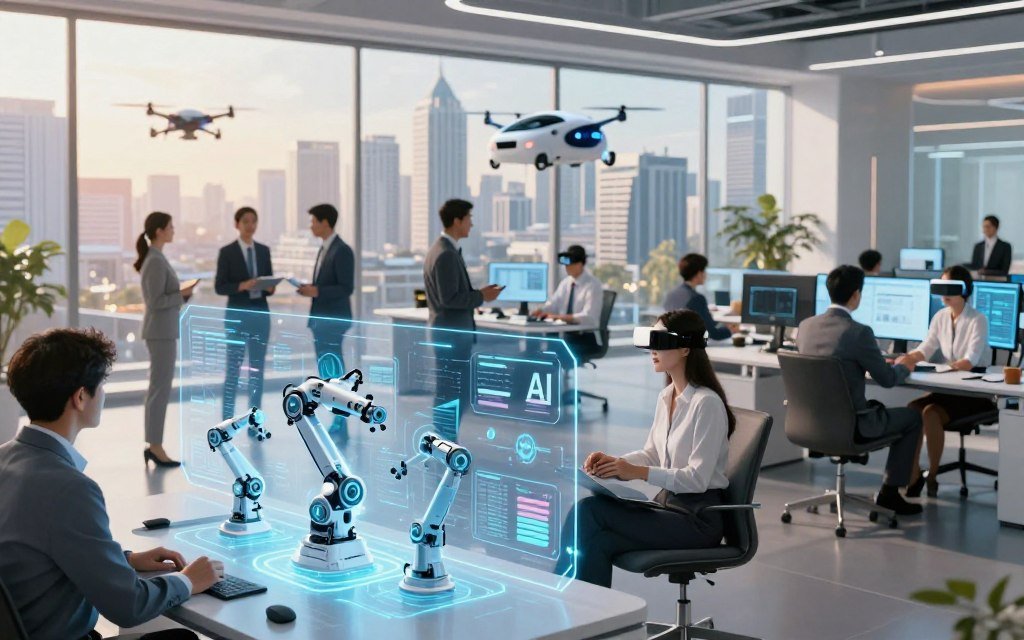
Modern workflows are being redefined by the increasing presence of robotics, driven by emerging AI automation trends. The manufacturing sectors will witness the rise of intelligent robots capable of adapting to dynamic environments and working alongside humans.
The integration of robotics in workflows is not just about automating tasks; it’s about creating a harmonious environment where humans and robots collaborate effectively. This collaboration is made possible by advancements in robotic technologies, particularly in the areas of collaborative robots (cobots) and soft robotics.
Collaborative Robots or Cobots in Shared Spaces
Cobots are designed to work alongside human workers, enhancing productivity and safety in shared workspaces. Unlike traditional industrial robots that are often segregated from human workers due to safety concerns, cobots are equipped with sensors and AI algorithms that enable them to detect and respond to their environment.
Key Features of Cobots:
- Safety features to prevent accidents
- Flexibility in performing various tasks
- Ease of programming and integration
- Ability to work alongside humans
These features make cobots an attractive solution for businesses looking to automate certain processes without completely overhauling their existing workflows.
Advancements in Soft Robotics and Dexterity
Soft robotics is another area that is gaining traction, particularly in applications that require delicate handling or interaction with fragile objects. Soft robots are made from flexible, compliant materials that can safely interact with humans and other objects.
The potential applications of soft robotics are vast, ranging from healthcare and manufacturing to service robotics.
| Application Area | Description | Benefits |
|---|---|---|
| Healthcare | Soft robots for patient care and rehabilitation | Gentle interaction, improved patient comfort |
| Manufacturing | Handling fragile components | Reduced damage, increased precision |
| Service Robotics | Robots for handling and serving food | Improved hygiene, enhanced customer experience |
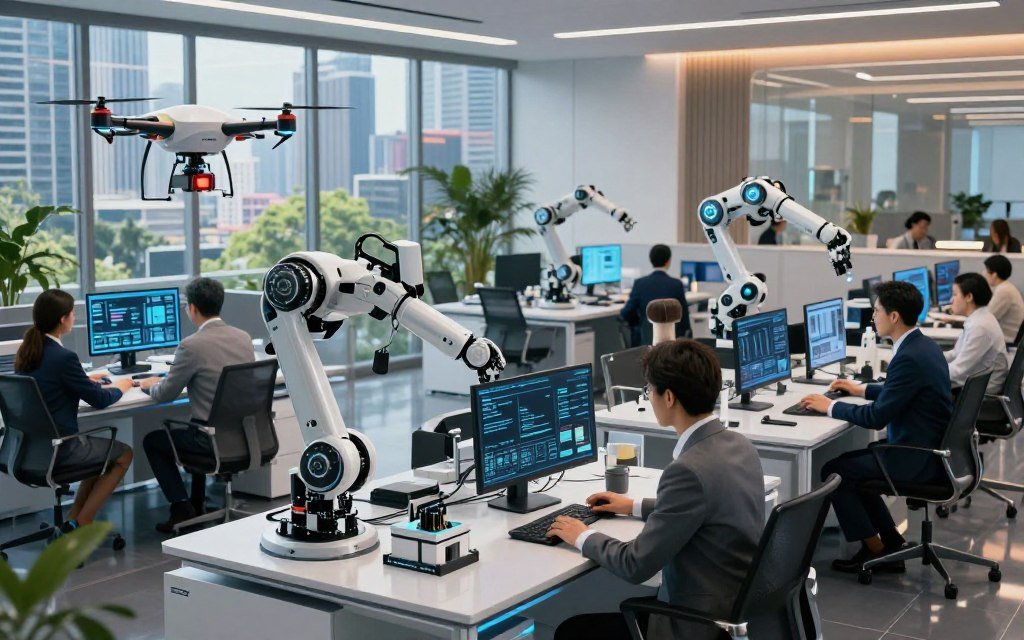
As robotics continues to evolve, we can expect to see more sophisticated robots that can adapt to various tasks and environments. The future of robotics in AI is bright, with emerging trends pointing towards more collaborative, flexible, and intelligent robotic systems.
Transforming the Manufacturing Sector
The future of manufacturing is being reshaped by AI automation, promising improved production rates and reduced defects. This transformation is multifaceted, impacting various aspects of the manufacturing process.
AI automation is revolutionizing the manufacturing sector by introducing cutting-edge technologies that enhance efficiency and productivity. One of the key areas where AI is making a significant impact is in predictive maintenance and asset management.
Predictive Maintenance and Asset Management
Predictive maintenance involves using AI algorithms to analyze data from equipment sensors to predict when maintenance is required. This approach helps prevent unexpected equipment failures, reducing downtime and increasing overall productivity.
AI-powered predictive maintenance enables manufacturers to schedule maintenance activities during planned downtime, thus minimizing the impact on production. Moreover, it helps in extending the lifespan of equipment by identifying potential issues before they become critical.
Supply Chain Optimization Through AI
AI is also being used to optimize supply chains by analyzing data from various sources to predict demand, manage inventory, and streamline logistics. This leads to more efficient supply chain operations and reduced costs.
The integration of AI in supply chain management allows for real-time monitoring and adjustments, enabling manufacturers to respond quickly to changes in demand or supply. This agility is crucial in today’s fast-paced manufacturing environment.
By leveraging AI innovation developments, manufacturers can achieve significant improvements in their operations, from production to delivery. The technological evolution in AI is set to continue, driving further advancements in the manufacturing sector.
AI Automation in Healthcare and Diagnostics
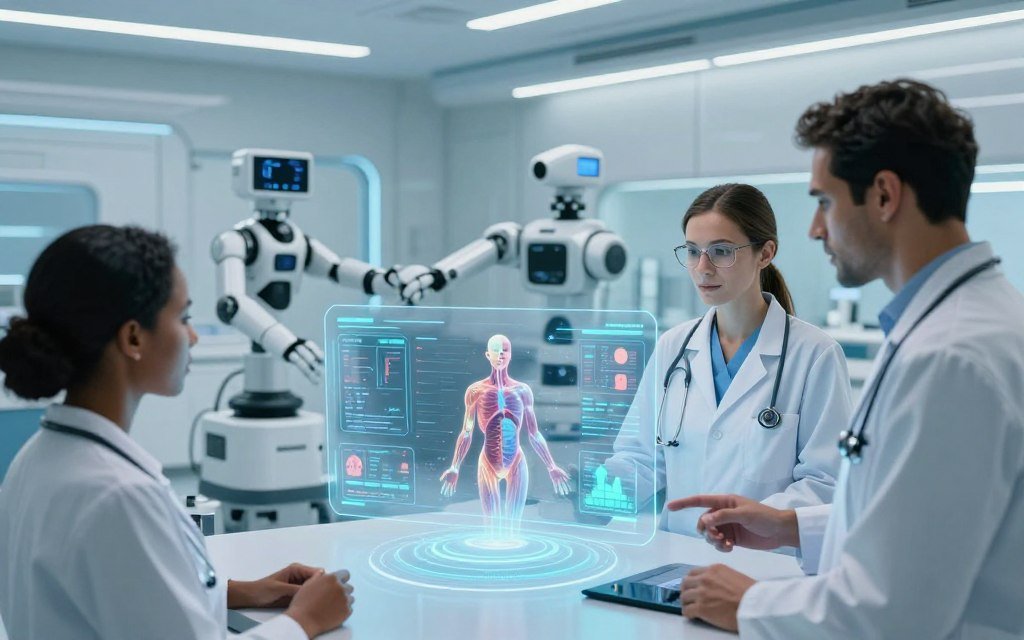
AI automation is poised to redefine healthcare by improving diagnostic accuracy, accelerating drug discovery, and enhancing patient monitoring. The healthcare industry is on the cusp of a revolution, driven by machine learning advancements and the integration of AI into various clinical workflows.
The analysis of vast amounts of medical data is a critical application of AI in healthcare. AI algorithms will analyze vast amounts of medical data to identify patterns, predict disease outbreaks, and aid in early detection of illnesses. This capability is transforming the landscape of healthcare by enabling proactive measures against potential health crises.
Accelerating Drug Discovery Processes
One of the significant benefits of AI automation in healthcare is the acceleration of drug discovery processes. By analyzing large datasets related to diseases, genetic information, and drug interactions, AI can identify potential drug candidates and predict their efficacy. This not only speeds up the drug development process but also reduces costs and improves success rates.
- AI-driven analysis of genomic data to identify potential therapeutic targets
- Predictive modeling to forecast drug efficacy and potential side effects
- Streamlining clinical trials through AI-optimized patient selection and trial design
Personalized Medicine and Patient Monitoring
AI is also enabling personalized medicine by tailoring treatment plans to individual patients based on their genetic profiles, medical histories, and lifestyle factors. Furthermore, AI-powered patient monitoring systems can continuously track patient health, detect anomalies, and alert healthcare providers to potential issues before they become critical.
The future of healthcare is intricately linked with the artificial intelligence future trends and ai industry predictions. As AI continues to evolve, we can expect even more innovative applications in healthcare, from robotic surgery to AI-driven diagnostic tools.
Revolutionizing Financial Services and Fintech
Emerging trends in AI automation are set to revolutionize the financial services landscape. The sector is witnessing significant advancements in automation technology growth, driven by the need for efficiency, accuracy, and enhanced customer experience.
“AI decision-making and prediction modeling will advance to the point where AI systems function as strategic business partners, helping executives make informed decisions and automate complex tasks.” This forward-thinking approach underscores the potential of AI to transform financial services.
Automated Fraud Detection Systems
One of the critical areas where AI is making a significant impact is in automated fraud detection systems. By leveraging machine learning algorithms and real-time data analysis, financial institutions can now detect and prevent fraudulent activities more effectively.
The use of AI in fraud detection not only enhances security but also reduces the false positive rate, thereby improving customer satisfaction. As ai innovation developments continue to evolve, we can expect even more sophisticated fraud detection mechanisms.
Algorithmic Trading and Risk Assessment
AI is also revolutionizing algorithmic trading and risk assessment in the financial sector. By analyzing vast amounts of market data, AI systems can identify patterns and make predictions that inform trading decisions.
This not only enhances the speed and accuracy of trading but also helps in assessing and mitigating risks. As a result, financial institutions can optimize their investment strategies and improve overall performance.
The integration of AI in financial services is a testament to the power of emerging ai automation trends. As the technology continues to evolve, it is likely to have a profound impact on the industry, driving growth and innovation.
The Role of Generative AI in Creative Industries
The integration of generative AI in creative industries is redefining the boundaries of artistic expression. This technological evolution in ai is not only enhancing existing creative processes but also opening up new possibilities for innovation.
Generative AI models are being increasingly used for content creation and automated design. These models can generate high-quality content, such as images, videos, and music, with minimal human intervention. For instance, AI-powered tools can create personalized marketing materials, reducing the time and cost associated with traditional design processes.
Content Creation and Automated Design
Some notable applications of generative AI in content creation include AI-generated art, which has been showcased in various exhibitions and has even been sold at auctions. Automated video production is another area where AI can help in editing and customizing video content for different audiences.
- AI-generated art
- Automated video production
- Music generation
These applications are not only enhancing the creative process but also making it more efficient. The future of ai automation in creative industries looks promising, with potential advancements in ai innovation developments.
The Future of Human-AI Collaboration
The collaboration between humans and AI is expected to lead to new forms of creative expression and innovation. While AI can process and analyze vast amounts of data, human creativity and intuition are essential for guiding AI systems towards producing meaningful and impactful content.
| Application Area | Description | Benefits |
|---|---|---|
| Art and Design | AI-generated art and designs | Enhances creativity, reduces production time |
| Content Creation | Automated generation of images, videos, and music | Personalization, cost-effectiveness |
| Marketing | Personalized marketing materials | Increased engagement, reduced costs |

The role of generative AI in creative industries is multifaceted, ranging from content creation and automated design to enhancing human-AI collaboration. As AI continues to evolve, we can expect even more innovative applications in the creative sector, driven by ai innovation developments and the future of ai automation.
Enhancing Customer Experience Through Intelligent Chatbots
As we move forward in the automation revolution forecast, intelligent chatbots are becoming increasingly integral to enhancing customer experience. These chatbots are not just simple automated responders; they are sophisticated tools powered by emerging AI automation trends and machine learning advancements.
Intelligent virtual assistants will evolve to provide even more sophisticated and human-like interactions, becoming integral parts of our daily routines. This evolution is largely driven by improvements in natural language processing (NLP), enabling chatbots to understand and respond to customer queries more effectively.
Natural Language Processing Improvements
The advancements in NLP are a crucial factor in the development of more sophisticated chatbots. These improvements allow chatbots to comprehend the nuances of human language, including idioms, colloquialisms, and context-specific queries.
With enhanced NLP capabilities, chatbots can engage in more meaningful conversations, providing customers with relevant and accurate responses. This not only improves customer satisfaction but also reduces the need for human intervention in routine inquiries.
Hyper-Personalization in Marketing
Another significant aspect of intelligent chatbots is their ability to facilitate hyper-personalization in marketing. By analyzing customer data and behavior, chatbots can offer personalized recommendations and solutions, enhancing the overall customer experience.
This level of personalization is made possible by the integration of machine learning algorithms that can process vast amounts of customer data. As a result, businesses can tailor their marketing strategies to individual customer preferences, leading to increased engagement and loyalty.
In conclusion, intelligent chatbots are set to revolutionize customer experience by providing more sophisticated, personalized, and efficient interactions. As emerging AI automation trends continue to evolve, we can expect to see even more innovative applications of chatbot technology in the future.
Ethical Considerations and Algorithmic Bias
The increasing reliance on AI automation raises significant ethical concerns that must be addressed to ensure a fair and transparent technological evolution in AI. As AI systems become more pervasive, their impact on society grows, making it imperative to address issues related to bias, transparency, and data privacy.
Ensuring Transparency in Automated Decisions
Ensuring that AI systems are transparent, explainable, and free from bias is critical to building trust and accountability. Transparency in automated decisions can be achieved through techniques such as model interpretability and explainability. This involves developing AI models that can provide clear insights into their decision-making processes.
Key strategies for transparency include:
- Implementing model interpretability techniques to understand AI decision-making.
- Using explainable AI (XAI) to provide insights into complex models.
- Regular auditing and testing of AI systems for bias and fairness.
By adopting these strategies, organizations can foster trust in their AI systems and ensure that automated decisions are fair and unbiased.
Addressing Data Privacy and Security
Data privacy and security are paramount in the development and deployment of AI systems. Ensuring the integrity and confidentiality of data used in AI models is crucial to preventing data breaches and maintaining user trust.
Best practices for data privacy and security include:
| Practice | Description | Benefit |
|---|---|---|
| Data Encryption | Encrypting data both in transit and at rest. | Protects against unauthorized access. |
| Access Controls | Implementing strict access controls for data and AI systems. | Ensures that only authorized personnel can access sensitive data. |
| Regular Audits | Conducting regular audits of AI systems and data handling practices. | Helps identify and mitigate potential security risks. |

By prioritizing data privacy and security, organizations can safeguard their AI systems against potential threats and maintain the trust of their users.
The Impact on the Global Labor Market
The future of AI automation is poised to reshape the global workforce, presenting both opportunities and challenges. As AI continues to advance, its influence on the labor market is becoming a critical area of discussion.
The rise of AI-driven automation will inevitably lead to job displacement, particularly in industries that rely heavily on repetitive and manual tasks. According to recent forecasts, sectors with high concentrations of routine work are more susceptible to automation, potentially displacing millions of jobs worldwide.
Job Displacement vs. Job Creation
While automation may replace certain jobs, it also has the potential to create new ones. AI innovation developments are expected to give rise to novel professions and enhance productivity in existing roles. The key to navigating this shift lies in understanding the balance between job displacement and creation.
Industries that adopt automation technologies may see the emergence of new job categories, such as AI trainers, data analysts, and robotics engineers. These roles will require workers to acquire new skills, emphasizing the need for continuous education and training programs.
The Rise of New Tech-Centric Roles
The automation revolution forecast suggests that as AI becomes more pervasive, the demand for tech-centric roles will increase. This shift will necessitate a workforce that is adept in managing and maintaining AI systems.
To thrive in an automated job market, workers will need to develop skills that complement AI, such as critical thinking, creativity, and complex problem-solving. By focusing on these areas, individuals can position themselves for success in a future where AI and human collaboration becomes the norm.
Ultimately, the impact of AI automation on the global labor market will be multifaceted. While there are challenges to be addressed, there are also significant opportunities for growth and innovation. By understanding these dynamics, we can better prepare for the changes ahead.
Preparing the Workforce for a Tech-Driven Economy
As AI automation continues to reshape industries, it’s crucial to focus on preparing the workforce for the challenges and opportunities that lie ahead. The rapidly evolving landscape of artificial intelligence future trends demands a proactive approach to workforce development.
The need for a skilled and adaptable workforce has never been more pressing. With machine learning advancements driving innovation, industries are looking for professionals who can not only operate but also interpret and improve AI systems.
Upskilling and Reskilling Initiatives
To address the changing employment landscape, society must invest in upskilling and reskilling initiatives. This involves providing training programs that focus on emerging technologies and trends in AI automation. By doing so, workers can acquire the skills necessary to remain relevant in a competitive job market.
According to recent insights, “Society must focus on reskilling and upskilling the workforce to adapt to the changing employment landscape.” This underscores the importance of continuous learning and professional development in the face of emerging AI automation trends.

The Importance of Lifelong Learning
Lifelong learning is no longer a choice but a necessity in today’s fast-paced technological environment. As AI continues to evolve, workers must be willing to learn new skills and adapt to new technologies to remain employable.
This requires a cultural shift, where continuous education and training are valued and supported by both employers and policymakers. By fostering a culture of lifelong learning, we can ensure that the workforce remains agile and capable of navigating the challenges and opportunities presented by AI automation.
- Investing in education and retraining programs
- Promoting a culture of continuous learning
- Encouraging adaptability and resilience in the workforce
Security Challenges in an Automated World
The rise of AI automation brings with it a new era of security challenges that must be addressed proactively. As automation technology growth continues to accelerate, the potential vulnerabilities associated with AI systems are becoming a pressing concern.
The development of rigorous risk management systems will be crucial to mitigate the risks associated with AI-powered cyberattacks. According to recent insights, the sophistication of cyberattacks is increasing, with AI playing a significant role in enhancing the capabilities of these threats.
Defending Against AI-Powered Cyberattacks
AI-powered cyberattacks represent a new frontier in cybersecurity threats. These attacks leverage machine learning algorithms to identify vulnerabilities and exploit them more effectively than traditional methods. To counter these threats, it’s essential to develop advanced threat detection systems that can recognize and respond to AI-driven attacks.
The technological evolution in AI is a double-edged sword; while it brings numerous benefits, it also empowers malicious actors with sophisticated tools. Therefore, understanding the mechanisms behind AI-powered cyberattacks is crucial for developing effective defense strategies.
Building Robust and Resilient Systems
Building robust and resilient systems is critical in the face of evolving cybersecurity threats. This involves not only implementing robust security protocols but also ensuring that these systems can adapt to new threats as they emerge. The ai industry predictions suggest that future cybersecurity solutions will need to be highly dynamic and responsive.
A key aspect of building resilient systems is the integration of predictive analytics and continuous monitoring. By leveraging these technologies, organizations can stay ahead of potential threats and minimize the impact of any security breaches.
In conclusion, as AI automation continues to grow, addressing the associated security challenges will be paramount. By understanding the threats and proactively developing robust defense mechanisms, we can ensure a safer and more secure technological future.
Sustainable Development and Green AI Initiatives
The future of AI is not just about technological advancements, but also about ensuring these advancements are sustainable and environmentally friendly. As AI continues to permeate various sectors, its environmental impact becomes a growing concern. The development of green AI initiatives is crucial for mitigating the ecological footprint of AI systems.
AI can play a significant role in enhancing climate initiatives by optimizing energy usage, improving climate modeling, and enabling innovative solutions for renewable energy. By leveraging AI, we can create more efficient systems that not only reduce environmental impact but also contribute to sustainable development.
Optimizing Energy Consumption in Data Centers
Data centers, which are the backbone of AI operations, consume significant amounts of energy. Optimizing energy consumption in these centers is a critical step towards making AI more sustainable. Techniques such as improving cooling systems, using renewable energy sources, and enhancing hardware efficiency can significantly reduce the carbon footprint of data centers.
For instance, Google has been using AI to optimize the cooling of its data centers, resulting in a significant reduction in energy consumption. Similarly, Microsoft has been exploring the use of underwater data centers that are cooled naturally by the surrounding water, further reducing the need for artificial cooling.
| Company | Initiative | Impact |
|---|---|---|
| AI-optimized cooling | Significant reduction in energy consumption | |
| Microsoft | Underwater data centers | Natural cooling, reduced energy usage |
AI for Climate Change Mitigation
AI can be a powerful tool in the fight against climate change. By analyzing vast amounts of data, AI can help improve climate modeling and predictions, enabling more effective mitigation strategies. Additionally, AI can optimize renewable energy systems, predict energy demand, and enhance the efficiency of climate change mitigation efforts.
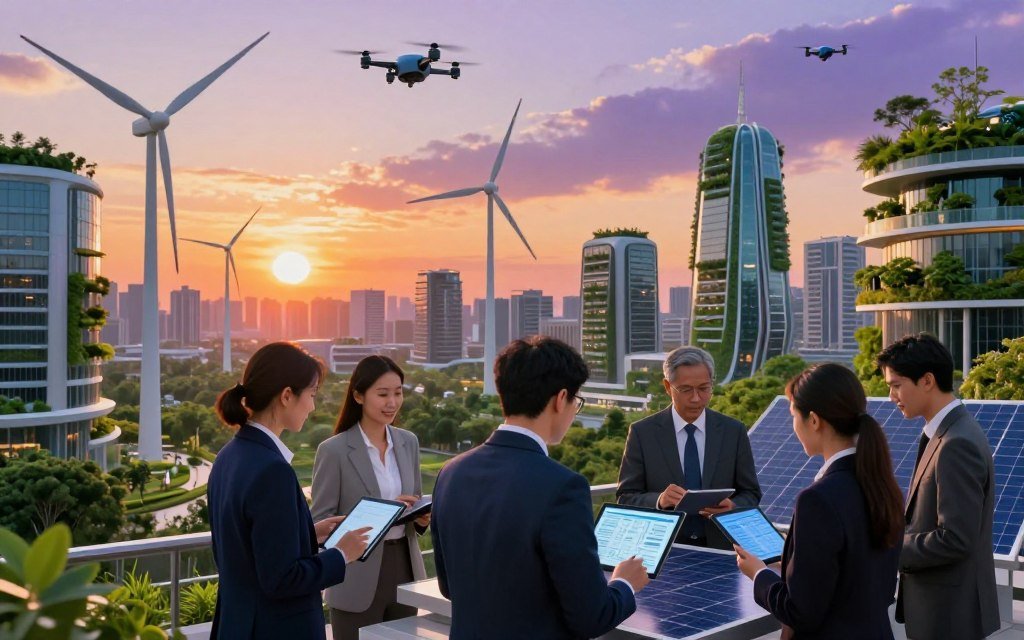
For example, AI can be used to analyze satellite data to monitor deforestation, track ocean health, and predict extreme weather events. This information can be invaluable for policymakers and environmental organizations working to combat climate change.
By embracing green AI initiatives and leveraging AI for climate change mitigation, we can create a more sustainable future where technological advancements and environmental stewardship go hand in hand.
Predicting the Next Decade of Innovation
With advancements in technology accelerating at an unprecedented rate, the next decade promises to be pivotal for AI automation. As we look to the future, it’s essential to consider the potential developments that will shape the industry.
The development of artificial general intelligence (AGI) is a long-term goal, with significant potential implications for various aspects of society. AGI refers to a hypothetical AI system that possesses the ability to understand, learn, and apply its intelligence across a wide range of tasks, similar to human intelligence.
The Path Toward Artificial General Intelligence
The path toward achieving AGI is complex and involves overcoming numerous technical challenges. Researchers are exploring various approaches, including:
- Advancements in machine learning algorithms
- Improvements in natural language processing
- Integration of cognitive architectures
Key Challenges:
- Developing more sophisticated and human-like reasoning capabilities
- Enhancing the ability to learn from fewer data
- Addressing ethical considerations and ensuring transparency
Societal Shifts and Regulatory Frameworks
As AI continues to evolve, it is likely to bring about significant societal shifts. These may include changes in the job market, with both new opportunities emerging and certain roles becoming obsolete. Regulatory frameworks will need to adapt to these changes, ensuring that the benefits of AI are realized while minimizing potential risks.
Key Considerations:
- Developing regulations that foster innovation while protecting societal interests
- Addressing concerns related to data privacy and security
- Ensuring that the benefits of AI are equitably distributed
The next decade will be crucial in shaping the future of AI automation. By understanding the potential developments and challenges, we can better prepare for the changes that lie ahead.
Conclusion
The future of AI automation holds immense promise and potential, with far-reaching implications for various aspects of our lives. As AI continues to evolve, it is crucial to address the challenges and opportunities presented by this technology. The automation revolution forecast suggests that industries will be transformed, and new opportunities will emerge.
Understanding artificial intelligence future trends is essential for organizations and individuals to prepare for the changes ahead. By embracing the potential of AI automation, we can create a more efficient, productive, and innovative future.
As we move forward, it is vital to ensure that the development of AI is responsible and beneficial to society, aligning with the future of ai automation that prioritizes human well-being and progress.
FAQ
What are the primary artificial intelligence future trends to watch?
How will automation technology growth affect the global economy?
What does the automation revolution forecast say about the job market?
What are the most impactful machine learning advancements recently?
What is the future of robotics in ai for industrial settings?
How can businesses stay ahead of emerging ai automation trends?
How would you describe the technological evolution in ai over the last few years?
What are the top ai industry predictions for the next decade?
What are the latest ai innovation developments in environmental science?
Why is the future of ai automation considered a “revolutionary” change?
💼 Build Your AI-Powered Income
Turn your ideas into income with these bestselling guides:



🌟 Ready to Build Your AI Income Stream?
You’ve learned the tools — now master the strategies!
Explore our exclusive AI Side Hustle & Passive Income eBooks to start earning smarter with ChatGPT, Canva, and automation tools.