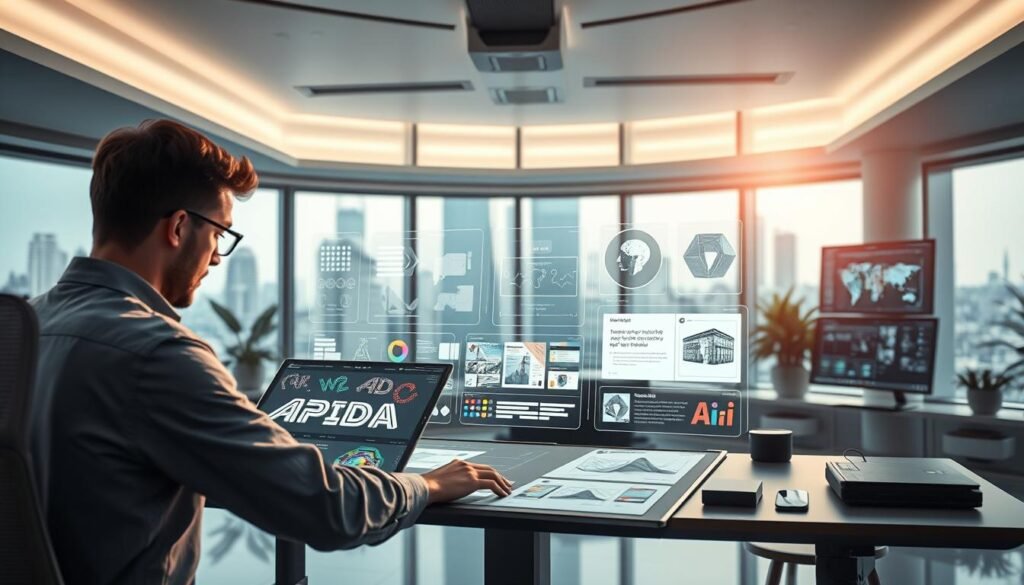
The digital landscape is witnessing a significant transformation, driven by advancements in artificial intelligence. AI-powered design tools are revolutionizing the creative process, enabling individuals and businesses to produce high-quality visuals with ease.
These innovative tools are changing the game, making it possible for anyone to create stunning graphics, regardless of their design experience. The result is a more vibrant and diverse digital environment, where creativity knows no bounds.
Key Takeaways
- AI-powered design tools are transforming the creative landscape.
- These tools enable users to produce high-quality visuals with ease.
- The use of AI in design is democratizing creativity.
- Businesses and individuals can now create professional-grade graphics.
- The future of digital creativity is being shaped by AI innovations.
What Are AI Image & Graphic Design Tools?
With the integration of artificial intelligence, graphic design tools have become more sophisticated, enabling users to create stunning visuals with ease. AI image and graphic design tools are transforming the creative landscape by providing innovative solutions that streamline the design process.
Definition and Purpose
AI image and graphic design tools utilize artificial intelligence to assist in the creation, editing, and enhancement of visual content. The primary purpose of these tools is to make graphic design more accessible and efficient, allowing both professionals and non-designers to produce high-quality graphics.
These tools leverage AI algorithms to automate tasks such as image editing, color correction, and layout suggestions, thereby simplifying the design process. According to a recent report by Grand View Research, the global AI in the media and entertainment market is expected to reach $99.48 billion by 2030, growing at a compound annual growth rate (CAGR) of 26.9%. This growth underscores the increasing importance of AI in creative industries.
Types of AI Design Tools
There are several types of AI design tools available, catering to different aspects of graphic design:
- Image Editing Tools: These tools use AI to enhance and manipulate images, offering features like automatic retouching and object removal.
- Graphic Design Software: AI-powered graphic design software provides templates, design suggestions, and automated formatting options.
- 3D Modeling and Animation: AI-driven tools for 3D modeling and animation enable the creation of complex visuals and animations with relative ease.
By understanding the different types of AI design tools, users can select the ones that best fit their needs, whether they are professionals looking to streamline their workflow or beginners seeking to create professional-looking graphics.
Benefits of Using AI Design Tools
With the advent of AI photo editing software, designers and non-designers alike can now achieve professional-grade designs with ease. The benefits of using AI design tools are multifaceted, impacting various aspects of the design process.
Time Efficiency
One of the primary advantages of AI design tools is their ability to save time. Advanced image editing AI can automate repetitive tasks, such as resizing images, removing backgrounds, and applying filters, allowing designers to focus on more complex and creative tasks.
For instance, Designs.AI transformed the logo design process for Jane D., a small business owner, with its user-friendly logo generator, making it incredibly easy to create a professional brand image online for free.
Enhanced Creativity
AI design tools also enhance creativity by providing users with a wide range of templates, design elements, and AI-driven suggestions. This enables users to explore different design options and ideas that they might not have considered before.
- Access to a vast library of templates and design elements
- AI-driven design suggestions based on the project’s context
- The ability to experiment with different styles and layouts
Cost-Effectiveness
Furthermore, AI design tools can be cost-effective. By automating certain tasks and providing accessible design solutions, businesses can reduce their design costs. This is particularly beneficial for small businesses and startups with limited budgets.

The cost-effectiveness of AI design tools, combined with their ability to enhance creativity and efficiency, makes them an invaluable resource for businesses and individuals looking to elevate their brand’s visual identity.
Popular AI Image & Graphic Design Tools
With the advent of machine learning design tools, graphic design automation software has become increasingly sophisticated, offering a wide range of creative possibilities for designers and non-designers alike.
Several AI image and graphic design tools have gained popularity due to their innovative features and user-friendly interfaces. Let’s explore some of these tools:
Adobe Sensei
Adobe Sensei is a suite of AI and machine learning technologies developed by Adobe. It is integrated into various Adobe applications, including Photoshop and Illustrator, enhancing their capabilities with AI-driven features.
One of the key benefits of Adobe Sensei is its ability to automate repetitive tasks, allowing designers to focus on more creative aspects of their work. For instance, it can help with content-aware fills, object detection, and image editing suggestions.
Canva
Canva is a popular graphic design platform that leverages AI to simplify the design process. It offers a range of templates and design tools that make it accessible to users without extensive design experience.
Canva’s AI capabilities include features like image resizing, color palette suggestions, and font pairing recommendations. These features enable users to create professional-looking designs with ease.
Daz 3D
Daz 3D is a 3D modeling and animation software that utilizes AI to streamline the creation of 3D content. It is known for its user-friendly interface and powerful tools that cater to both beginners and professionals.
The software offers a vast library of pre-made models, poses, and environments, which can be customized using Daz 3D’s AI-driven tools. This allows users to create complex 3D scenes and animations efficiently.
These AI image and graphic design tools are revolutionizing the creative industry by providing innovative solutions, enhancing productivity, and making design more accessible to a broader audience.
How AI is Transforming Graphic Design
The advent of AI in graphic design is revolutionizing the industry by automating mundane tasks and enhancing creativity. AI image generators are revolutionizing the way we create, edit, and enhance visual content.
With the integration of AI, graphic designers can now focus on more complex and creative tasks, while AI handles the more repetitive and time-consuming aspects of design.
Automation in Design Tasks
AI is significantly automating various design tasks, making the design process more efficient. Some of the tasks being automated include:
- Image editing and retouching
- Layout design
- Color correction and enhancement
Automated graphic design solutions are not only saving time but also reducing the need for extensive human intervention in routine design tasks.

Personalized Design Experiences
AI is also enabling the creation of personalized design experiences tailored to individual preferences and needs. By analyzing user data and behavior, AI can generate designs that are more likely to engage and resonate with the target audience.
| Design Element | Traditional Design | AI-Driven Design |
|---|---|---|
| Customization | Limited to pre-defined templates | Highly personalized based on user data |
| Time Efficiency | Time-consuming manual adjustments | Rapid generation and iteration |
| Creativity | Dependent on human creativity | Enhanced by AI’s ability to analyze trends and patterns |
By leveraging AI in graphic design, businesses can create more effective and engaging visual content, ultimately driving better results and customer satisfaction.
Key Features to Look For
When selecting AI image and graphic design tools, several key features can significantly enhance your experience. The effectiveness of these tools largely depends on their ability to provide a seamless and productive design environment.
User-Friendly Interfaces
A user-friendly interface is crucial for maximizing the potential of AI design tools. It allows users to navigate the tool with ease, access various features, and focus on the creative aspect of their projects. For instance, Canva is a well-known graphic design tool that has integrated AI-powered features, making it easier than ever to create stunning visuals.
Key aspects of a user-friendly interface include:
- Intuitive navigation and clear menu options
- Customizable workspaces to suit individual preferences
- Drag-and-drop functionality for effortless design
Image Editing Capabilities
Advanced image editing capabilities are a hallmark of effective AI image and graphic design tools. These capabilities can range from basic adjustments like brightness and contrast to complex manipulations such as object removal or content-aware fill.
Some of the key image editing features to look for include:
- AI-driven filters and effects
- Advanced retouching tools
- Support for various file formats
Collaboration Tools
In today’s collaborative work environments, collaboration tools are essential for teams working on graphic design projects. AI image and graphic design tools that offer real-time collaboration features can significantly enhance productivity and creativity.
Important collaboration features include:
- Real-time commenting and feedback
- Simultaneous editing capabilities
- Version control and history
By focusing on these key features, you can choose an AI image and graphic design tool that not only meets your current needs but also adapts to your future creative endeavors.
AI Tools for Non-Designers
With machine learning design tools, individuals without extensive design experience can now produce professional-grade graphics. This shift is largely due to the accessibility and user-friendly nature of modern AI design tools.
Accessibility and Ease of Use
AI tools have made graphic design more approachable for non-designers by simplifying the design process. Fiverr Logo Maker is a prime example, allowing users to create custom logos using AI. It’s perfect for small businesses, startups, and individuals who need a professional logo without hiring a designer.
These tools often feature intuitive interfaces that guide users through the design process, making it easier to achieve desired results without prior design knowledge.
Templates and Pre-Designed Elements
Another key feature of AI design tools for non-designers is the availability of templates and pre-designed elements. These resources help users get started quickly and ensure their designs look professional.
For instance, many AI graphic design tools offer a wide range of templates for various applications, from social media graphics to presentations. Users can customize these templates to fit their needs, saving time and effort.

| Tool | Key Features | Benefits for Non-Designers |
|---|---|---|
| Fiverr Logo Maker | AI-powered logo creation, customizable templates | Easy creation of professional logos without design experience |
| Canva | User-friendly interface, extensive template library | Simplifies graphic design, accessible to all skill levels |
| Adobe Sensei | AI-driven design assistance, integration with Adobe Creative Cloud | Enhances design capabilities, streamlines workflow |
By leveraging these AI tools, non-designers can create high-quality graphics that meet their needs, whether for personal or professional projects.
Customization Options in AI Design Tools
Customization is at the heart of AI-driven graphic design, enabling users to create unique visual content. AI design tools offer a range of features that allow for personalization, making it easier to produce tailored designs.
Templates vs. Custom Designs
One of the primary customization options in AI design tools is the choice between using pre-designed templates and creating custom designs from scratch. Templates provide a convenient starting point, especially for those who are not experienced designers. They are particularly useful for projects that require a standard format, such as social media graphics or presentation slides.
Benefits of Templates:
- Time-saving
- Easy to use
- Professionally designed layouts
On the other hand, custom designs offer the flexibility to create truly unique and personalized content. AI tools can assist in this process by suggesting design elements, layouts, and color schemes based on the project’s requirements.
Color and Font Customization
Color and font customization are crucial aspects of creating effective designs. AI tools like Color Magic, an AI-driven color palette generator, help designers create harmonious color schemes for their projects. This not only enhances the aesthetic appeal but also ensures that the design is consistent with the brand’s identity.
Font customization is equally important, as the choice of font can significantly impact the readability and overall feel of a design. AI design tools often include a wide range of fonts and the ability to adjust font sizes, styles, and spacing to achieve the desired effect.
Key Features of Color and Font Customization:
- AI-driven color palette generation
- Extensive font libraries
- Adjustable font styles and sizes
Challenges and Considerations
While AI image generators offer numerous benefits, they also present certain challenges that need to be addressed. As these tools become more integrated into the design process, it’s essential to consider the implications of their use.
Ethical Concerns in Design
One of the significant challenges associated with AI design technology is the ethical considerations it raises. For instance, the use of AI-generated images can sometimes blur the line between original and generated content, potentially leading to issues related to copyright and ownership. Designers must navigate these ethical waters carefully to ensure that their use of AI tools is both legal and ethical.
As AI design technology continues to evolve, it’s crucial to address concerns about the potential for AI-generated content to be used in misleading or deceptive ways. The ability to create highly realistic images raises questions about the authenticity of visual content, which can have significant implications for industries such as advertising, journalism, and even politics.
“The world of AI image generators is vast and varied, offering something for everyone, from artists to marketers to hobbyists.” This diversity, while beneficial, also underscores the need for clear guidelines and ethical standards in the use of AI design tools.
Potential Dependence on Technology
Another consideration is the potential for designers to become overly reliant on AI design technology. While these tools can significantly enhance productivity and creativity, there’s a risk that they might diminish the development of traditional design skills. It’s essential for designers to strike a balance between leveraging AI tools and honing their own creative abilities.
The advanced image editing AI capabilities of modern design tools can also lead to an over-reliance on technology, potentially stifling innovation that comes from human intuition and creativity. By being aware of these potential pitfalls, designers can use AI tools in a way that complements their work without diminishing their creative input.

In conclusion, while AI image and graphic design tools offer many advantages, they also present challenges that need to be carefully managed. By understanding and addressing these challenges, designers and businesses can harness the full potential of AI design technology while minimizing its risks.
Future Trends in AI Design Tools
Emerging trends in AI design tools are redefining the boundaries of creativity and efficiency. The global AI in the media and entertainment market is expected to reach $99.48 billion by 2030, growing at a compound annual growth rate (CAGR) of 26.9%. This growth is indicative of the significant impact AI is set to have on various industries, including graphic design.
Predictive Design Capabilities
Predictive design capabilities are becoming increasingly sophisticated, allowing AI-powered design tools to anticipate user needs and preferences. This trend is driven by advancements in machine learning algorithms that can analyze vast amounts of data to predict design trends and user behavior.
Key Features of Predictive Design:
- Trend forecasting
- Personalized design recommendations
- Automated design adjustments based on user feedback
Integration with Other Technologies
The integration of AI design tools with other technologies is another significant trend. This includes augmented reality (AR), virtual reality (VR), and Internet of Things (IoT) devices, which are expanding the possibilities of graphic design beyond traditional screens.
| Technology | Application in Graphic Design | Benefits |
|---|---|---|
| AR/VR | Immersive experiences, interactive designs | Enhanced user engagement, innovative storytelling |
| IoT | Dynamic, data-driven designs for connected devices | Personalization, real-time updates |
As AI continues to evolve, we can expect automated graphic design solutions to become more prevalent, streamlining the design process and opening up new creative possibilities. The future of graphic design is undoubtedly intertwined with the advancements in AI technology.
Getting Started with AI Image & Graphic Design Tools
Embarking on your journey with AI Image & Graphic Design Tools can be both exciting and overwhelming. With numerous options available, selecting the right tool is crucial for achieving your creative goals.
Selecting the Ideal Tool
When choosing an AI design tool, consider your specific needs, such as the type of projects you want to work on and the level of complexity you’re comfortable with. Tools like Adobe Sensei and Canva offer a range of features that cater to different user needs, from simple logo making to complex graphic design tasks.
Maximizing Your Experience
To get the most out of artificial intelligence graphic design tools, explore the available templates and pre-designed elements. Experimenting with different features and customization options will help you understand the tool’s capabilities and enhance your design skills.
Whether you’re looking for a simple logo maker or a full-fledged creative suite, 2024 has an AI tool that can help you achieve your creative goals. By choosing the right tool and learning to maximize its features, you can unlock new creative possibilities and produce high-quality designs with ease.
FAQ
What are AI image and graphic design tools, and how do they work?
What are the benefits of using AI design tools?
What are some popular AI image and graphic design tools?
How is AI transforming the field of graphic design?
What features should I look for when selecting an AI image and graphic design tool?
Are AI design tools suitable for non-designers?
Can I customize designs created with AI design tools?
What are some potential challenges and considerations when using AI design tools?
What are some future trends in AI design tools?
How do I get started with AI image and graphic design tools?
Can AI design tools be used for commercial purposes?
How do AI design tools handle image editing and manipulation?
Build Smarter Content Systems with Practical Mini-Guides
Short, actionable digital guides designed to help creators, bloggers, affiliate marketers, and online business owners learn faster, take action sooner, and grow with more clarity.

Pinterest Excellence Playbook
Evergreen traffic + Pinterest SEO. A practical Pinterest growth blueprint covering platform positioning, profile SEO, branding consistency, content planning, pin design, publishing cadence, analytics, monetization, and weekly execution.
View Guide
Google Web Story Excellence Playbook
Visual SEO + mobile traffic. A complete mini guide for planning, designing, optimizing, publishing, and monetizing Google Web Stories that can rank in Search and Google Discover.
View Guide
YouTube Excellence Playbook
Channel growth + SEO system. A practical YouTube growth blueprint covering channel strategy, branding, content planning, YouTube SEO, asset dimensions, analytics, engagement, technical quality, monetization, safety, and weekly workflow.
View Guide
Instagram Excellence Playbook
Profile growth + engagement. A complete Instagram growth blueprint covering profile optimization, content strategy, posting system, SEO, engagement, and monetization.
View Guide
Facebook Excellence Playbook
Reach + content strategy. A complete Facebook growth blueprint covering page positioning, branding, content planning, posting strategy, SEO, analytics, engagement, monetization, and compliance.
View Guide🚀 Want More Practical Digital Resources?
Explore SmartResourceVault for AI prompts, templates, planners, trackers, mini-guides, audio resources, and bundles built for faster execution and everyday growth.
📘 Browse Mini Guides »💼 Build Your AI-Powered Income
Turn your ideas into income with these bestselling guides:


🌟 Ready to Build Your AI Income Stream?
You’ve learned the tools — now master the strategies!
Explore our exclusive AI Side Hustle & Passive Income eBooks to start earning smarter with ChatGPT, Canva, and automation tools.