
Did you know that people see images sixty thousand times faster than words? This great speed means your brand has only a tiny moment to catch someone’s eye. Using smart graphic layouts helps your message stay in their minds before they scroll away.
These data-rich items are great tools to spice up your social media feeds or email notes. They let readers learn complex facts without reading long pages of text. Sadly, the old way of building these items takes too much time and effort.
Modern tools like Venngage help teams skip the hard work of content production. You can now get professional results to show industry trends or share expert tips. This easy way to design lets you tell great stories while saving your energy.
Key Takeaways
- Visuals are processed sixty thousand times faster than plain text.
- High-quality graphics boost engagement on social platforms and emails.
- Traditional design methods often drain valuable team resources.
- Modern automated tools simplify the storytelling process for brands.
- Data-driven designs help clarify complex industry trends quickly.
- Using smart software allows for consistent and professional communication.
The Evolution of Visual Storytelling in Digital Marketing
Visual storytelling in digital marketing has evolved dramatically, driven by the need for more engaging and digestible content. The use of infographics has become a cornerstone in this evolution, providing a powerful means to convey complex information in an easily understandable format.
Why Infographics Remain a Marketing Powerhouse
Infographics help cut through the noise by breaking down complex data or information into digestible content, thereby increasing engagement and conversions. According to a study, visual content is 40 times more likely to be shared on social media than other types of content. This highlights the effectiveness of infographics in capturing audience attention and driving marketing goals.
Infographics remain effective due to their ability to simplify complex information. As Marcus Sheridan, a renowned marketing expert, once said,
“Content is king, but visual content is the crown prince.”
This emphasizes the significance of visual elements in marketing strategies.
The Shift Toward AI-Driven Design Workflows
Traditional infographic creation has several limitations, including being time-consuming, requiring design skills, and being prone to manual errors. The advent of AI-driven design tools has revolutionized this process, enabling fast visual creation and reducing the dependency on skilled designers.
The integration of AI in design workflows has made it possible to automate the creation of infographics, thereby streamlining the process and improving efficiency. As a result, businesses can now produce high-quality visual content quickly and effectively using various data visualization tools.
Understanding AI Infographics for Marketing
AI infographics are transforming the digital marketing landscape by providing fast, customizable, and effective visual content. As businesses continue to rely on visual storytelling to engage their audience, the integration of AI in infographic design has become a game-changer.
AI-powered infographic generators simplify the design process, allowing marketers to create high-quality visuals without extensive design experience. These tools enable personalization and customization at scale, enhance data visualization, and improve overall marketing efficiency.
Defining AI-Powered Data Visualization
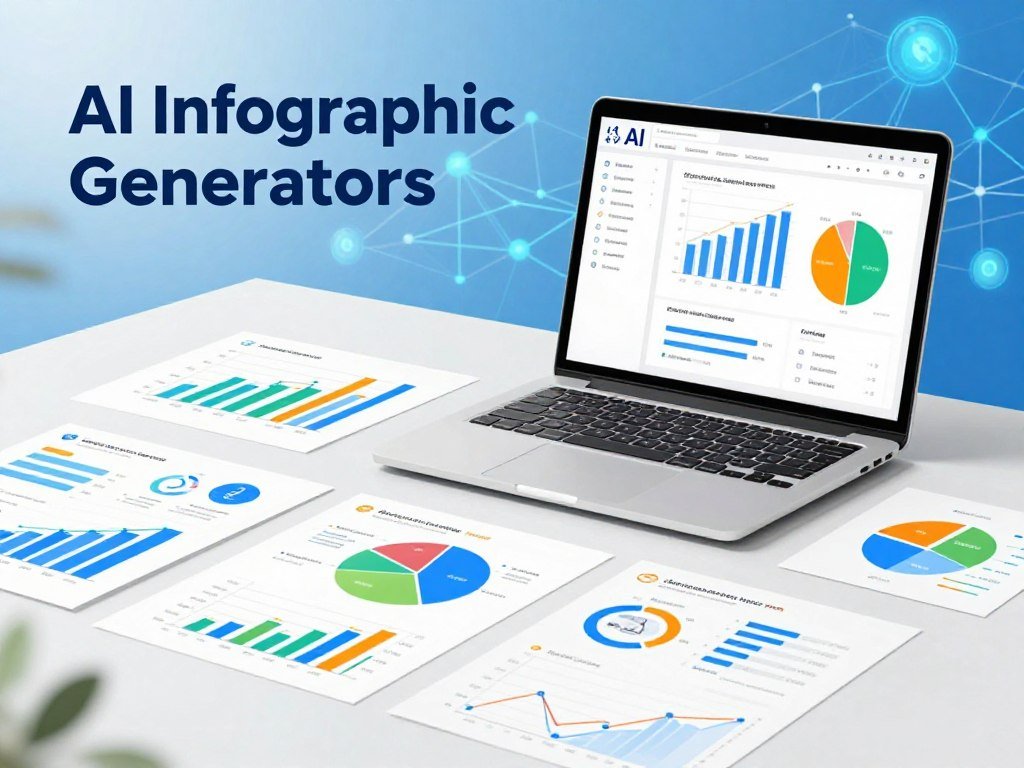
AI-powered data visualization refers to the use of artificial intelligence algorithms to analyze data and create visual representations. This process involves complex data analysis and the generation of interactive, dynamic visuals that help marketers understand and communicate their data insights more effectively.
As noted by a recent study, “AI-driven data visualization tools are revolutionizing the way businesses interact with their data, making it more accessible and actionable.” This highlights the growing importance of AI in enhancing data visualization capabilities.
Key Benefits of Automating Visual Content Creation
Automating visual content creation with AI offers several key benefits, including:
- Increased efficiency in content production
- Enhanced creativity through data-driven design suggestions
- Consistency across marketing channels
- Personalization at scale
By leveraging AI infographic generators, marketers can streamline their visual content creation process, allowing them to focus on higher-level creative decisions and strategy. As a result, businesses can achieve a more significant impact with their digital marketing graphics and visual content creation efforts.
Top AI Tools for Infographics and Data Visualization
Several AI tools have emerged as leaders in the field of infographic design, offering advanced features and ease of use. These tools are revolutionizing the way businesses create visual content, making it more efficient and effective.
Canva Magic Design for Rapid Layouts
Canva’s Magic Design feature uses AI to generate infographic layouts quickly. This tool is particularly useful for users who struggle with design principles or are short on time. With Magic Design, you can create professional-looking infographics in minutes.
Venngage AI for Professional Data Representation
Venngage AI is designed to help users create professional-grade infographics with ease. It offers a range of templates and AI-driven design suggestions to enhance your visual content. The tool is ideal for businesses looking to present complex data in a clear and engaging manner.
Piktochart AI for Business Reporting
Piktochart AI is another powerful tool for creating infographics, particularly for business reporting. It offers a user-friendly interface and a variety of templates tailored to different business needs. The AI feature helps in customizing the design to fit your brand’s identity.
Adobe Express Generative Fill for Custom Assets
Adobe Express’s Generative Fill feature allows users to create custom assets for their infographics using AI. This tool is perfect for those looking to add unique elements to their visual content. It simplifies the process of creating custom graphics without requiring extensive design experience.
Here’s a comparison of these AI tools based on key features:
| Tool | Key Feature | Best For |
|---|---|---|
| Canva Magic Design | Rapid Layout Generation | Quick Infographic Creation |
| Venngage AI | Professional Data Representation | Business Presentations |
| Piktochart AI | Business Reporting Templates | Custom Business Reports |
| Adobe Express Generative Fill | Custom Asset Creation | Unique Visual Elements |
Best Practices for Fast Visual Creation
To maximize the potential of AI infographic tools, marketers must adopt a strategic approach to creating visual content. This involves several key practices that ensure the generated infographics are not only visually appealing but also effective in communicating the intended message.
Structuring Your Data Before Prompting
Before creating an infographic, it’s crucial to structure your data properly. This step is fundamental in ensuring that the AI tool can interpret and visualize the data effectively.
Here are some steps to follow:
- Clean and organize your data to remove any inconsistencies or errors.
- Identify the key message you want to convey through your infographic.
- Determine the most relevant data points that support your message.
As data visualization expert, Andy Kirk, notes, “The quality of your visualization is directly related to the quality of your data.”
Selecting the Right Templates for Your Message
Choosing the right template is vital for effectively communicating your message. AI infographic tools often come with a variety of templates designed for different purposes.
| Template Type | Best Use Case | Key Features |
|---|---|---|
| Informational | Explaining a concept or process | Clear headings, concise text, relevant icons |
| Comparative | Comparing data across categories | Bar charts, side-by-side comparisons, contrasting colors |
| Statistical | Presenting statistical data | Charts, graphs, statistical icons |
By selecting a template that aligns with your message, you can enhance the clarity and impact of your marketing visuals.
Balancing Automation with Human Creativity
While AI can automate many aspects of infographic creation, human creativity is essential for ensuring that the final product is engaging and aligns with your brand’s voice.
“The future of graphic design is not about replacing humans with machines, but about augmenting human creativity with AI.”
To strike the right balance, consider the following:
- Use AI for data visualization and layout suggestions.
- Apply human judgment to refine the design and ensure it meets your brand standards.
- Customize elements such as color schemes, fonts, and imagery to reflect your brand identity and create compelling marketing visuals.

Optimizing Infographics for Social Media Engagement
Optimizing infographics for social media is a multifaceted process that involves adapting visuals, crafting compelling headlines, and analyzing performance metrics. As visual content continues to dominate social media platforms, marketers are under increasing pressure to create engaging infographics that capture audience attention and drive interaction.
To achieve this, it’s essential to understand the nuances of different social media platforms and how they impact the performance of visual content. Adapting visuals for different platform dimensions is crucial because each platform has its unique specifications and user preferences.
Adapting Visuals for Different Platform Dimensions
Different social media platforms have varying requirements for image sizes and formats. For instance, Instagram favors square or vertical images, while Facebook and Twitter can accommodate a range of formats. Using AI tools to resize and adjust infographics for different platforms can save time and ensure consistency across all marketing channels.
By leveraging AI-driven design tools, marketers can easily adapt their infographics to fit the dimensional requirements of various social media platforms, ensuring their visual content looks professional and engaging regardless of where it’s displayed.
Using AI to Generate Catchy Headlines and Captions
Crafting compelling headlines and captions is vital for driving engagement with infographics on social media. AI tools can analyze trending topics, keywords, and audience preferences to generate catchy and relevant captions that resonate with the target audience.
By automating the caption generation process, marketers can save time while ensuring their infographics are accompanied by engaging text that encourages clicks, shares, and other desired actions.
Analyzing Performance Metrics to Refine Visual Strategy
To continually improve the effectiveness of their infographics, marketers must analyze performance metrics across different social media platforms. This involves tracking engagement rates, click-through rates, and other relevant metrics to understand what works and what doesn’t.
AI can help in analyzing these metrics by providing insights into audience behavior and preferences, enabling marketers to refine their visual strategy and create more impactful infographics in the future.
Overcoming Common Challenges in AI Design
While AI-generated infographics offer a fast visual creation process, they also come with their own set of obstacles that marketers must overcome. The challenges associated with AI design include ensuring the accuracy of the data presented, maintaining a consistent brand voice, and avoiding generic visuals that fail to engage the target audience.
Ensuring Data Accuracy and Fact-Checking
One of the primary concerns when using AI for infographic creation is the accuracy of the data being presented. Inaccurate data can lead to misleading visuals, which can harm a brand’s credibility. To mitigate this, it’s essential to fact-check the information fed into the AI system.
Here is a simple process to ensure data accuracy:
- Verify the source of the data
- Cross-check the data with other credible sources
- Regularly update the data to reflect the latest information
| Data Verification Step | Description | Importance Level |
|---|---|---|
| Source Verification | Check the credibility of the data source | High |
| Cross-Checking | Compare data with other reliable sources | High |
| Data Updates | Regularly refresh data to ensure it is current | Medium |
Maintaining Brand Voice in Automated Graphics
Another challenge is maintaining a consistent brand voice in AI-generated graphics. While AI can produce visually appealing graphics, it may not always capture the nuances of a brand’s tone and language. To address this, marketers should review and adjust the AI-generated content to ensure it aligns with their brand’s overall voice and messaging.
Avoiding Generic Visual Clutter
The risk of creating generic visuals is another challenge associated with AI-generated infographics. To avoid this, marketers can customize the templates and design elements provided by AI tools, incorporating unique elements that reflect their brand’s identity.
By understanding and addressing these challenges, marketers can effectively leverage AI-generated infographics to enhance their marketing strategies and achieve their goals.
Advanced Techniques for Data-Driven Marketing
Data-driven marketing is witnessing a significant transformation with the advent of advanced AI techniques. These innovations are enabling marketers to create more effective, personalized, and engaging campaigns.
Integrating Real-Time Data Feeds into Infographics
One of the key advanced techniques involves integrating real-time data feeds into infographics. This allows for the creation of dynamic visuals that can update automatically, providing viewers with the most current information. For instance, using data visualization tools, marketers can create infographics that reflect real-time sales data, website traffic, or social media engagement metrics.
To achieve this, marketers can utilize APIs that fetch real-time data and integrate it into their infographics. Tools like Canva and Venngage offer features that support dynamic data integration, making it easier to keep visual content up-to-date.
Personalizing Visual Content for Targeted Segments
Personalization is another critical aspect of advanced data-driven marketing. By leveraging AI, marketers can create digital marketing graphics that are tailored to specific audience segments. This involves analyzing customer data to understand preferences, behaviors, and demographics, and then using this information to generate personalized visuals.
For example, AI tools can help create different versions of an infographic based on the viewer’s location, interests, or previous interactions with the brand. This level of personalization can significantly enhance engagement and conversion rates.
Using AI to Repurpose Long-Form Content into Visuals
Repurposing long-form content into visual formats is an effective way to breathe new life into existing marketing assets. AI tools can analyze lengthy content, such as blog posts or reports, and transform it into concise, visually appealing graphics.
This not only saves time but also helps in reaching a wider audience, as visual content is often more engaging and shareable. For instance, a detailed report can be condensed into an infographic highlighting key statistics and findings.
By adopting these advanced techniques, marketers can significantly enhance their data-driven marketing strategies, leading to more effective and engaging campaigns.
The Future of Graphic Design for Marketers
The future of graphic design for marketers is intricately linked with the evolution of visual content consumption and the rise of generative AI. As technology continues to advance, understanding these emerging trends is crucial for staying ahead in the competitive landscape of visual marketing.
“The future of graphic design is not just about creating visually appealing content; it’s about leveraging technology to create content that resonates with your audience,” says a leading expert in the field. This perspective underscores the importance of adapting to new technologies and trends in visual content creation.
Predictive Trends in Visual Content Consumption
Several key trends are expected to shape the future of visual content consumption. These include:
- Increased demand for interactive and immersive content
- Rise of personalized content driven by AI
- Greater emphasis on video content and motion graphics
- Enhanced focus on accessibility in visual content
By understanding these trends, marketers can better prepare their visual content strategies to meet the evolving needs of their audience.

The Role of Generative AI in Creative Collaboration
Generative AI is set to play a significant role in creative collaboration, enabling marketers to produce high-quality visual content more efficiently. AI-powered tools can assist in various aspects of graphic design, from suggesting layouts to automating repetitive tasks.
As infographic design software becomes more sophisticated, it will continue to empower marketers to create engaging and effective visual content. The collaboration between human creativity and AI-driven tools will be key to unlocking new possibilities in graphic design.
By embracing these advancements, marketers can not only streamline their design processes but also push the boundaries of what is possible in visual storytelling.
Conclusion
As we’ve explored throughout this article, AI infographics are revolutionizing the way marketers create and utilize visual content. By leveraging ai tools for infographics, businesses can significantly enhance their marketing visuals, making their messages more engaging and accessible to their target audience.
The integration of AI in graphic design has streamlined the process of creating high-quality infographics, allowing marketers to focus on strategy and creativity. With the ability to automate data visualization and personalize content, marketers can now produce compelling marketing visuals that resonate with their audience.
To stay ahead in the competitive landscape, it’s crucial for marketers to adopt these innovative tools and strategies. By doing so, they can not only elevate their visual content but also improve their overall marketing performance. As the field continues to evolve, staying updated with the latest trends and technologies in visual marketing will be key to sustained success.
FAQ
What are the primary benefits of using ai infographics for marketing?
Which are the most reliable ai tools for infographics available today?
How do data visualization tools help in making digital marketing graphics more effective?
Can infographic design software maintain my specific brand identity?
How does graphic design for marketers change with the introduction of generative AI?
Are there any risks to using AI for visual content creation?
How can I optimize my marketing visuals for different social media platforms?
Build Smarter Content Systems with Practical Mini-Guides
Short, actionable digital guides designed to help creators, bloggers, affiliate marketers, and online business owners learn faster, take action sooner, and grow with more clarity.

Pinterest Excellence Playbook
Evergreen traffic + Pinterest SEO. A practical Pinterest growth blueprint covering platform positioning, profile SEO, branding consistency, content planning, pin design, publishing cadence, analytics, monetization, and weekly execution.
View Guide
Google Web Story Excellence Playbook
Visual SEO + mobile traffic. A complete mini guide for planning, designing, optimizing, publishing, and monetizing Google Web Stories that can rank in Search and Google Discover.
View Guide
YouTube Excellence Playbook
Channel growth + SEO system. A practical YouTube growth blueprint covering channel strategy, branding, content planning, YouTube SEO, asset dimensions, analytics, engagement, technical quality, monetization, safety, and weekly workflow.
View Guide
Instagram Excellence Playbook
Profile growth + engagement. A complete Instagram growth blueprint covering profile optimization, content strategy, posting system, SEO, engagement, and monetization.
View Guide
Facebook Excellence Playbook
Reach + content strategy. A complete Facebook growth blueprint covering page positioning, branding, content planning, posting strategy, SEO, analytics, engagement, monetization, and compliance.
View Guide🚀 Want More Practical Digital Resources?
Explore SmartResourceVault for AI prompts, templates, planners, trackers, mini-guides, audio resources, and bundles built for faster execution and everyday growth.
📘 Browse Mini Guides »💼 Build Your AI-Powered Income
Turn your ideas into income with these bestselling guides:


🌟 Ready to Build Your AI Income Stream?
You’ve learned the tools — now master the strategies!
Explore our exclusive AI Side Hustle & Passive Income eBooks to start earning smarter with ChatGPT, Canva, and automation tools.