
The way we interact with technology is undergoing a significant transformation, driven by the emergence of All-in-One AI Assistants. These multifunctional digital helpers are revolutionizing both personal and professional landscapes by streamlining tasks and enhancing productivity.
With their ability to perform a wide range of tasks, from scheduling appointments to providing complex data analysis, these integrated AI solutions are becoming indispensable tools in today’s fast-paced digital world.
Key Takeaways
- All-in-One AI Assistants are transforming the way we work and interact with technology.
- These assistants offer a wide range of functionalities, enhancing productivity and efficiency.
- They are becoming essential for both personal and professional use.
- Integrated AI solutions simplify complex tasks and improve overall user experience.
- The adoption of All-in-One AI Assistants is on the rise, driven by their versatility and convenience.
What Are All-in-One AI Assistants?
All-in-One AI Assistants are revolutionizing the way we interact with technology. These intelligent applications are designed to make our lives easier by performing a variety of tasks and providing valuable services.
Definition and Overview
Definition and Overview
AI-powered Virtual Assistants, also known as Smart Virtual Assistants, utilize natural language processing (NLP) and machine learning to understand and respond to user requests. They can be integrated into various devices and platforms, making them highly versatile and convenient.
The capabilities of All-in-One AI Assistants extend beyond simple tasks. They can manage complex schedules, provide personalized recommendations, and even control other smart devices in your home or office.
Key Features of All-in-One AI Assistants
Some of the key features of these advanced assistants include:
- Advanced NLP capabilities for better understanding of user requests
- Integration with various devices and platforms for seamless interaction
- Personalized recommendations based on user behavior and preferences
- Ability to control other smart devices and systems
- Continuous learning and improvement through machine learning algorithms
To illustrate the capabilities of All-in-One AI Assistants, consider the following comparison of their features:
| Feature | Basic AI Assistants | All-in-One AI Assistants |
|---|---|---|
| NLP Capabilities | Limited understanding | Advanced understanding |
| Integration | Limited to a few devices | Integration with multiple devices and platforms |
| Personalization | Basic recommendations | Advanced personalized recommendations |
By understanding the definition, overview, and key features of All-in-One AI Assistants, we can better appreciate their potential to transform our daily lives and work processes.
How All-in-One AI Assistants Work
Understanding how All-in-One AI Assistants work requires a dive into the machine learning fundamentals that power their capabilities. These assistants are designed to learn from user interactions, improving their responses over time.
Machine Learning Fundamentals
At the core of AI Chatbots and Voice-Activated Assistants is a sophisticated machine learning algorithm. This algorithm enables the assistants to learn from data, identify patterns, and make predictions or decisions based on that data.
The process involves several key steps:
- Data Collection: Gathering relevant data from user interactions.
- Data Processing: Cleaning and organizing the data for analysis.
- Model Training: Using the processed data to train the machine learning model.
- Model Evaluation: Testing the trained model to ensure accuracy and effectiveness.
| Step | Description | Importance |
|---|---|---|
| Data Collection | Gathering user interaction data | High |
| Data Processing | Cleaning and organizing data | High |
| Model Training | Training the machine learning model | Critical |
| Model Evaluation | Testing the model’s accuracy | Critical |
Integration with Other Tools
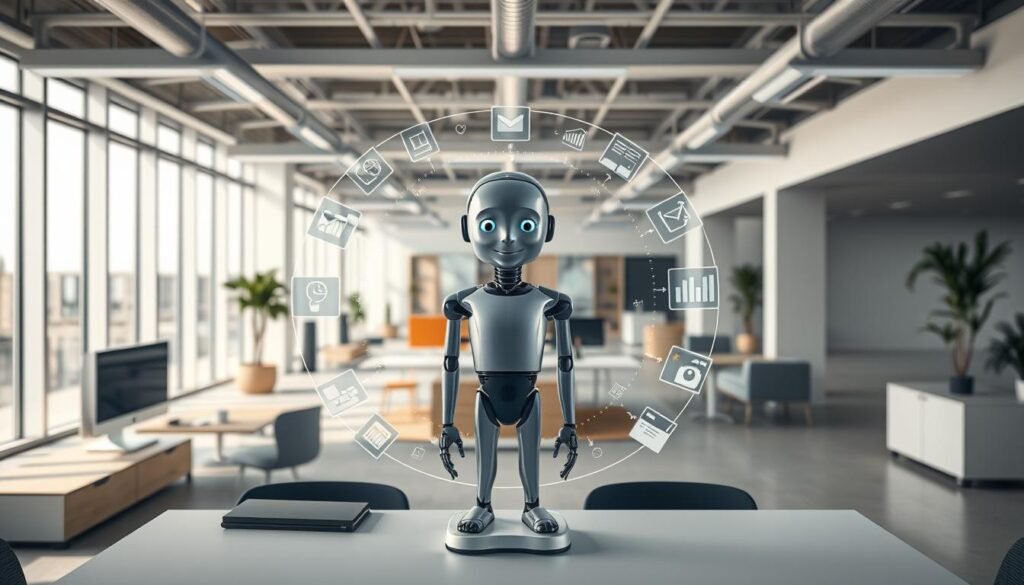
One of the key benefits of All-in-One AI Assistants is their ability to integrate with other tools and systems. This integration enhances their functionality, allowing them to access a broader range of data and services.
For instance, integrating AI assistants with calendar systems can enable features like scheduling appointments and sending reminders. Similarly, integration with smart home devices can allow users to control their home environment using voice commands.
By understanding how All-in-One AI Assistants work, users can better appreciate the potential benefits and limitations of these technologies. As AI continues to evolve, we can expect these assistants to become even more integrated into our daily lives.
Benefits of Using All-in-One AI Assistants
With the advent of Intelligent Personal Assistants, the potential for enhanced productivity has never been greater. All-in-One AI Assistants are designed to streamline tasks, provide valuable insights, and support users around the clock.
Enhanced Productivity and Efficiency
One of the primary benefits of using Multi-functional Voice Assistants is their ability to automate routine tasks, freeing up time for more strategic and creative work. By handling tasks such as scheduling, reminders, and data entry, these assistants enable users to focus on high-priority tasks.
“AI assistants are revolutionizing the way we work by making it easier to manage our daily tasks and responsibilities,” notes a recent industry report. This shift towards automation and efficiency is a key driver of productivity gains in the workplace.
Improved Decision-Making Capabilities
All-in-One AI Assistants are not just about task automation; they also provide valuable insights that can inform decision-making. By analyzing large datasets and identifying patterns, these assistants can offer recommendations that might not be immediately apparent to human decision-makers.
- Data analysis and insights
- Predictive modeling
- Personalized recommendations
For instance, a study by a leading research firm found that organizations using AI-driven decision support systems saw a significant improvement in their decision-making accuracy.
24/7 Availability and Support
Another significant advantage of All-in-One AI Assistants is their availability around the clock. Unlike human workers, AI assistants do not require breaks or time off, making them ideal for providing continuous support.
This 24/7 availability ensures that users can access help whenever they need it, whether it’s for answering queries, providing customer support, or simply offering guidance on using various tools and applications.
In conclusion, the benefits of using All-in-One AI Assistants are multifaceted, ranging from enhanced productivity and improved decision-making to around-the-clock support. As these technologies continue to evolve, their impact on the workplace is likely to grow, making them an indispensable tool for businesses and individuals alike.
Industries Benefiting from AI Assistants
AI assistants are transforming industries worldwide. With their ability to automate tasks, provide insights, and enhance customer experiences, it’s no wonder that various sectors are adopting these technologies. In this section, we’ll explore how AI assistants are making an impact in healthcare, education, and customer service.
Healthcare Innovations
In healthcare, Virtual AI Assistants are being used to improve patient care and streamline clinical workflows. For instance, they can help with appointment scheduling, medication reminders, and even provide basic medical information. This not only enhances patient engagement but also reduces the administrative burden on healthcare providers.
Education and Learning Tools
Educational institutions are leveraging All-in-One Voice Command Assistants to create personalized learning experiences. These tools can help students with homework, provide interactive learning materials, and even offer language learning capabilities. By making learning more engaging and accessible, AI assistants are helping to improve educational outcomes.
Customer Service Enhancements
In customer service, AI assistants are being used to provide 24/7 support, helping customers with their queries, and routing complex issues to human representatives. This not only improves customer satisfaction but also reduces the workload on human customer support agents, allowing them to focus on more complex issues.

| Industry | Application | Benefit |
|---|---|---|
| Healthcare | Patient care, appointment scheduling | Improved patient outcomes, reduced wait times |
| Education | Personalized learning, homework assistance | Enhanced student engagement, better grades |
| Customer Service | 24/7 Support, query resolution | Increased customer satisfaction, reduced support queries |
Comparison of Popular All-in-One AI Assistants
With the proliferation of AI-powered Virtual Assistants, understanding their differences is key to selecting the right one for your needs. The market is dominated by a few major players: Google Assistant, Amazon Alexa, Microsoft Cortana, and Apple Siri. Each of these All-in-One AI Assistants has its unique strengths and weaknesses.
Google Assistant vs. Amazon Alexa
Google Assistant and Amazon Alexa are two of the most widely used AI Assistants. Google Assistant is known for its ability to understand complex commands and its integration with Google services. Amazon Alexa, on the other hand, excels in smart home control and has a wide range of compatible devices.
| Feature | Google Assistant | Amazon Alexa |
|---|---|---|
| Smart Home Integration | Excellent | Excellent |
| Complex Command Understanding | Very Good | Good |
| Ecosystem Compatibility | Google Services | Alexa-compatible devices |
Microsoft Cortana vs. Apple Siri
Microsoft Cortana and Apple Siri are also significant players in the AI Assistant market. Cortana is integrated with Microsoft Office and is particularly useful for productivity tasks. Siri, being Apple’s proprietary assistant, offers seamless integration with Apple devices and services.
| Feature | Microsoft Cortana | Apple Siri |
|---|---|---|
| Productivity Integration | Microsoft Office | Apple Ecosystem |
| Device Compatibility | Windows, Android | Apple Devices |
| Task Management | Very Good | Good |
When choosing an All-in-One AI Assistant, it’s essential to consider your specific needs and the ecosystem you are already a part of. Whether it’s Google Assistant’s complex command understanding, Alexa’s smart home control, Cortana’s productivity features, or Siri’s Apple device integration, there’s an AI Assistant tailored to your requirements.
Customization Options Available
The ability to customize AI assistants is revolutionizing the way we interact with technology. As AI becomes more integrated into our daily lives, the need for personalized experiences grows. Smart Virtual Assistants and AI Chatbots are at the forefront of this change, offering various customization options to enhance user experience.
Personalization Features
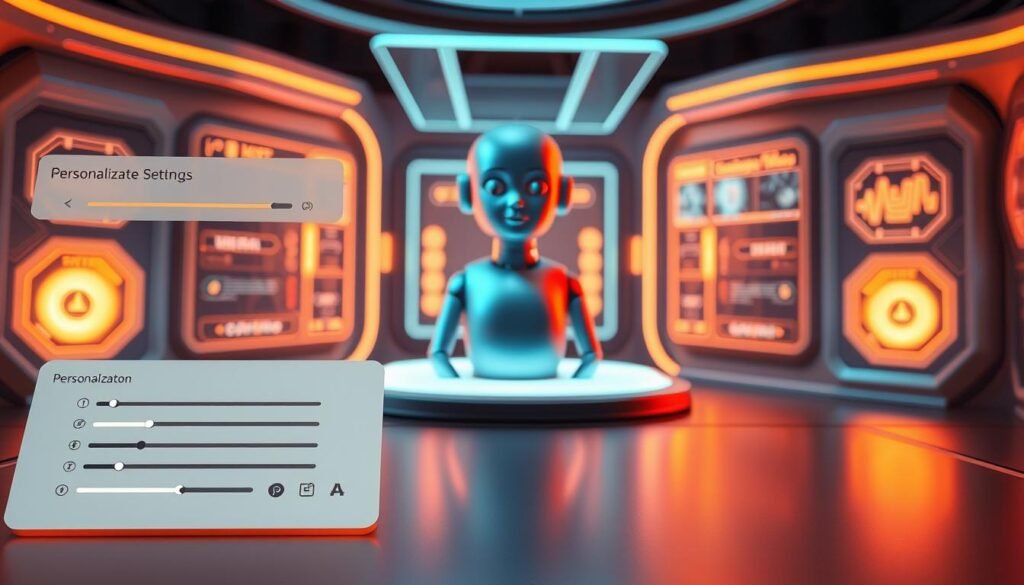
Personalization is a key aspect of modern AI assistants. Users can tailor their experience by adjusting settings, creating custom commands, and integrating with other services. For instance, Smart Virtual Assistants like Google Assistant and Amazon Alexa allow users to customize their home automation controls, making it easier to manage smart home devices.
Key personalization features include:
- Customizable wake words and voice commands
- Integration with third-party apps and services
- Personalized recommendations based on user behavior
Developing Specialized Skills
Developing specialized skills is another crucial aspect of customizing AI assistants. This involves creating custom intents and entities that allow the AI to perform specific tasks. For example, businesses can develop specialized skills for their AI Chatbots to handle customer inquiries more effectively.
The process of developing specialized skills typically involves:
- Identifying the specific needs and tasks required
- Designing and training the AI model with relevant data
- Testing and refining the skill to ensure accuracy and efficiency
Ethical Considerations in AI Usage
The growing reliance on AI assistants has raised important ethical concerns that need to be addressed. As these Voice-Activated Assistants become more pervasive, issues surrounding their operation and impact on users come into focus.
Data Privacy and Security
One of the primary ethical concerns is the handling of user data. Intelligent Personal Assistants often require access to sensitive information to function effectively. Ensuring that this data is protected and not misused is crucial.
To address these concerns, developers must implement robust security measures and be transparent about how user data is used and stored. This includes complying with regulations such as the General Data Protection Regulation (GDPR) and providing users with control over their data.
Bias and Transparency Challenges
Another significant ethical issue is the potential for bias in AI decision-making processes. If the data used to train these systems is biased, the outcomes can be discriminatory or unfair. Ensuring transparency in how AI assistants make decisions is vital to identifying and mitigating these biases.
To tackle this, developers should prioritize transparency and continually audit their systems for bias. This involves using diverse data sets for training and implementing mechanisms for users to provide feedback on the fairness of AI-driven decisions.
By addressing these ethical considerations, we can work towards creating AI assistants that are not only powerful but also fair and secure. This involves ongoing collaboration between developers, regulators, and users to ensure that these technologies serve the greater good.
Future Trends in AI Assistants
The future of AI assistants is poised to revolutionize the way we interact with technology. As we move forward, Multi-functional Voice Assistants are becoming increasingly sophisticated, integrating various features that enhance user experience. Virtual AI Assistants are at the forefront of this innovation, making daily tasks simpler and more efficient.
The advancements in AI technology are driven by several key trends. One of the most significant is the evolution of Natural Language Processing (NLP). NLP enables AI assistants to understand and respond to human language more accurately, making interactions feel more natural.
Evolution of Natural Language Processing
NLP has come a long way, from basic command recognition to understanding complex queries and nuances in language. This evolution is crucial for Virtual AI Assistants to provide relevant and helpful responses. The future of NLP lies in its ability to learn from user interactions, becoming more personalized and efficient over time.
Another significant trend is the Integration of Augmented Reality (AR). AR technology overlays digital information onto the real world, enhancing our interaction with the environment. When combined with AI assistants, AR can provide users with real-time, context-aware information, making it a powerful tool for various applications.
Integration of Augmented Reality
The integration of AR with AI assistants is set to transform numerous industries, from retail to education. For instance, Multi-functional Voice Assistants with AR capabilities can guide users through complex tasks, such as assembling furniture or navigating unfamiliar places, by providing step-by-step visual instructions.

As AI continues to advance, we can expect Virtual AI Assistants to become even more integral to our daily lives. The future trends in AI assistants point towards a more interactive, intuitive, and personalized experience, revolutionizing the way we live and work.
Tips for Choosing the Right AI Assistant
With numerous AI assistants available, choosing the right one depends on several key factors. The decision-making process involves understanding your specific needs and ensuring the assistant is compatible with your existing systems.
Identifying Your Needs
Before selecting an All-in-One AI Assistant, it’s crucial to identify what you need it for. Are you looking for something to manage your schedule, control smart home devices, or provide customer support? Different tasks require different capabilities.
- Task management and organization
- Smart home control
- Customer service and support
Evaluating Compatibility with Existing Systems
Once you’ve identified your needs, the next step is to evaluate the compatibility of the AI assistant with your existing systems. This includes checking if it can integrate with your current software and hardware.
| Compatibility Factors | Description |
|---|---|
| Software Integration | Ability to integrate with existing software solutions |
| Hardware Compatibility | Compatibility with various hardware devices |
| Data Security | Measures in place to protect user data |
By carefully considering these factors, you can make an informed decision when choosing an All-in-One Voice Command Assistant that meets your needs and enhances your productivity.
Common Challenges and Solutions
As AI assistants become more prevalent, understanding the common hurdles in their implementation is crucial. Organizations often face challenges when integrating AI-powered Virtual Assistants into their operations.

Overcoming User Resistance
User resistance is a significant barrier to the successful adoption of Smart Virtual Assistants. Employees may be hesitant due to concerns about job security or the complexity of new technology.
To overcome this resistance, it’s essential to provide comprehensive training and support. Highlighting the benefits of AI assistants, such as increased productivity and efficiency, can also help in gaining user acceptance.
- Educate users about the capabilities and limitations of AI assistants.
- Provide ongoing training and support to build confidence.
- Encourage feedback to improve the user experience.
Technical Limitations and Fixes
Technical issues, such as integration with existing systems and data privacy concerns, can also hinder the adoption of AI-powered Virtual Assistants.
To address these challenges, organizations should focus on developing robust infrastructure and implementing stringent data security measures.
- Ensure compatibility with existing IT systems.
- Implement robust data encryption and access controls.
- Regularly update software to patch vulnerabilities.
By understanding and addressing these challenges, organizations can more effectively implement Smart Virtual Assistants, enhancing their operations and improving user experience.
The Future of Work with All-in-One AI Assistants
The integration of AI Chatbots and Voice-Activated Assistants into the workplace is transforming the way teams collaborate and work together. As these technologies continue to evolve, they are poised to significantly impact the future of work.
Workforce Evolution
AI assistants are changing the dynamics of the workplace by automating routine tasks, allowing employees to focus on more complex and creative work. This shift is expected to lead to a more efficient and productive workforce.
Team Collaboration Tools
Voice-Activated Assistants, in particular, are enhancing team collaboration by providing a hands-free interface for communication and information sharing. This enables teams to work more effectively together, regardless of their location.
As AI technology continues to advance, businesses that adopt these tools will be better positioned to adapt to the changing work landscape and reap the benefits of increased productivity and collaboration.
FAQ
What are All-in-One AI Assistants, and how do they work?
What are the benefits of using All-in-One AI Assistants?
Can AI assistants be integrated with other tools and systems?
How do AI assistants handle data privacy and security?
What are some of the industries that are benefiting from AI assistants?
Can AI assistants be customized to meet specific user needs?
What are some of the challenges associated with implementing AI assistants?
How will AI assistants shape the future of work?
What are some of the future trends in AI assistants?
Build Smarter Content Systems with Practical Mini-Guides
Short, actionable digital guides designed to help creators, bloggers, affiliate marketers, and online business owners learn faster, take action sooner, and grow with more clarity.

Pinterest Excellence Playbook
Evergreen traffic + Pinterest SEO. A practical Pinterest growth blueprint covering platform positioning, profile SEO, branding consistency, content planning, pin design, publishing cadence, analytics, monetization, and weekly execution.
View Guide
Google Web Story Excellence Playbook
Visual SEO + mobile traffic. A complete mini guide for planning, designing, optimizing, publishing, and monetizing Google Web Stories that can rank in Search and Google Discover.
View Guide
YouTube Excellence Playbook
Channel growth + SEO system. A practical YouTube growth blueprint covering channel strategy, branding, content planning, YouTube SEO, asset dimensions, analytics, engagement, technical quality, monetization, safety, and weekly workflow.
View Guide
Instagram Excellence Playbook
Profile growth + engagement. A complete Instagram growth blueprint covering profile optimization, content strategy, posting system, SEO, engagement, and monetization.
View Guide
Facebook Excellence Playbook
Reach + content strategy. A complete Facebook growth blueprint covering page positioning, branding, content planning, posting strategy, SEO, analytics, engagement, monetization, and compliance.
View Guide🚀 Want More Practical Digital Resources?
Explore SmartResourceVault for AI prompts, templates, planners, trackers, mini-guides, audio resources, and bundles built for faster execution and everyday growth.
📘 Browse Mini Guides »💼 Build Your AI-Powered Income
Turn your ideas into income with these bestselling guides:


🌟 Ready to Build Your AI Income Stream?
You’ve learned the tools — now master the strategies!
Explore our exclusive AI Side Hustle & Passive Income eBooks to start earning smarter with ChatGPT, Canva, and automation tools.