



OpenAI Codex vs Claude Code (2026) – 360° Comparison

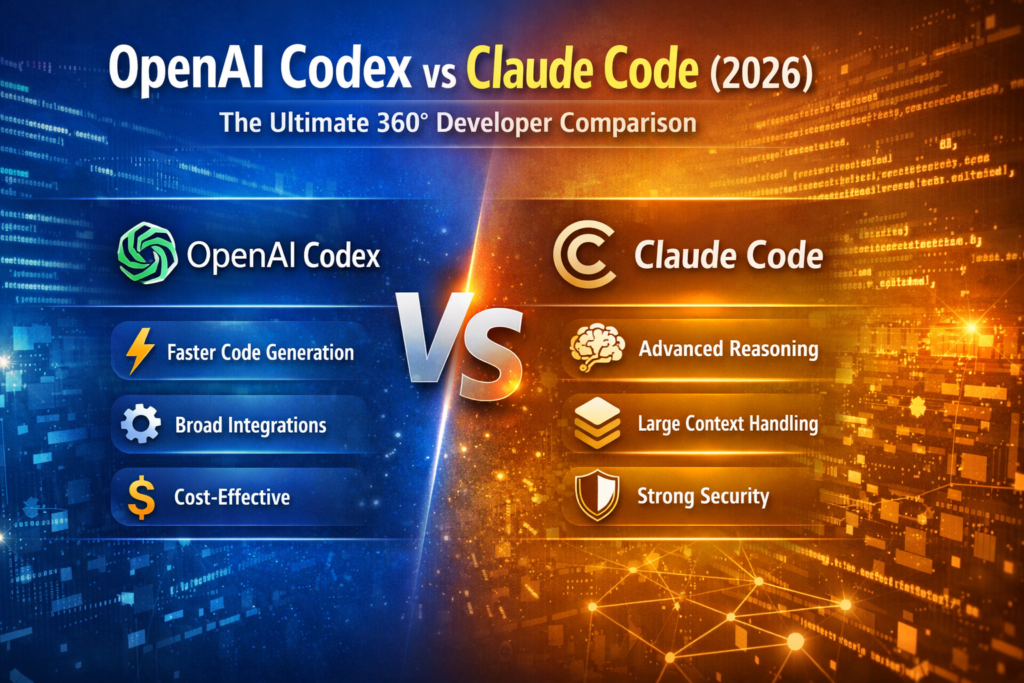
AI Coding Assistants • 2026 • 360° Review
OpenAI Codex vs Claude Code (2026): The Ultimate 360° Developer Comparison
A long, blog-ready, feature-by-feature breakdown of two leading AI coding agents—covering speed, reasoning, code quality, autonomy, integrations, security, cost, and best use cases.
Quick Take
- Choose OpenAI Codex if you want faster prototyping, quick snippets, and cost-efficient iteration.
- Choose Claude Code if you need deeper reasoning, cleaner architecture, and large-codebase understanding.
- Best workflow: Use Claude for planning/architecture + Codex for rapid implementation—then review like a senior engineer.
Table of Contents
- What is OpenAI Codex?
- What is Claude Code?
- 360° Feature Comparison
- Best Use Cases by Developer Type
- Performance on Large Codebases
- Security, Safety & Compliance
- Cost, Tokens & Efficiency
- Pros & Cons
- FAQ
1) What Is OpenAI Codex?
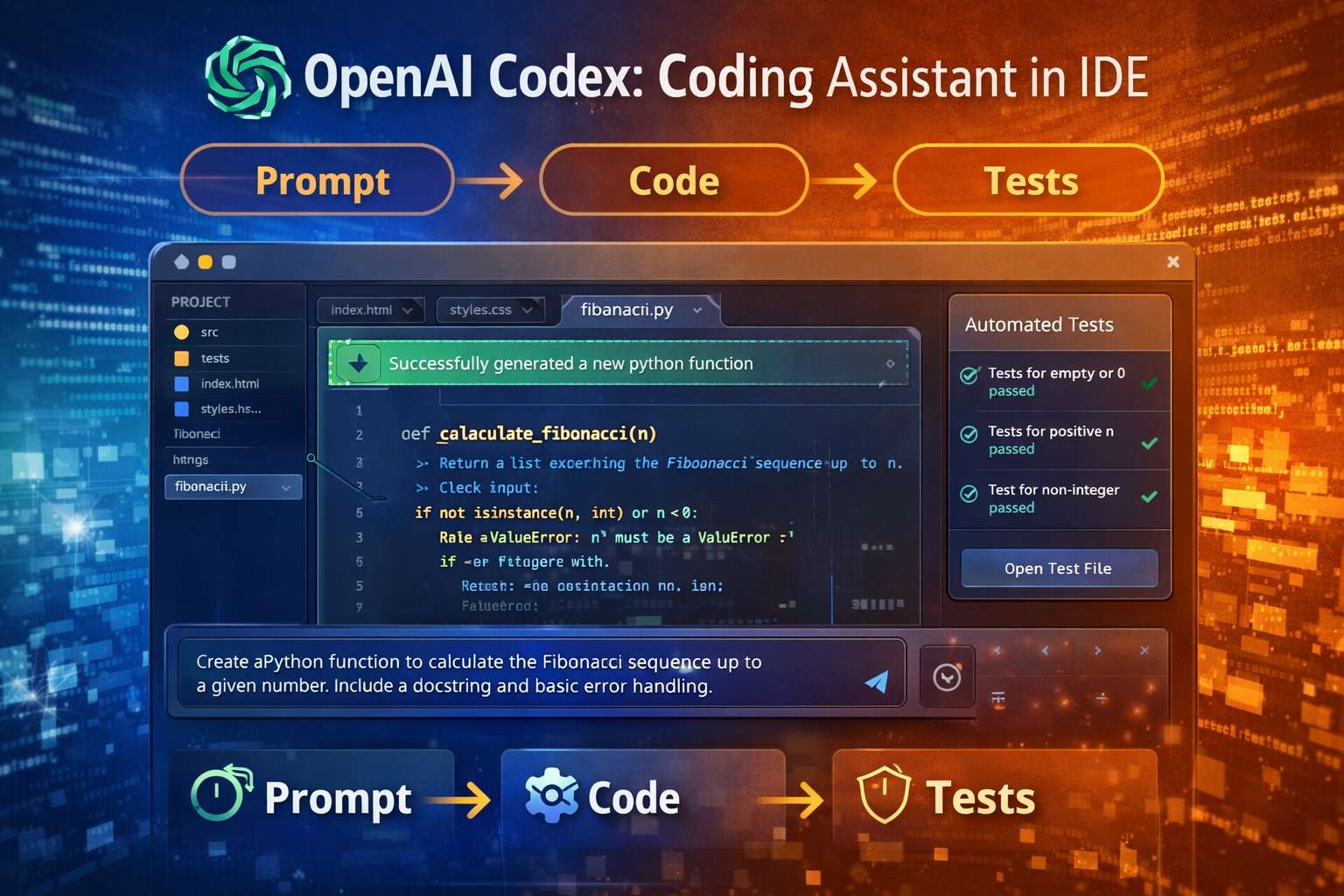
OpenAI Codex is an AI coding model built to convert natural language instructions into working code. In modern workflows, Codex-style agents are widely used for rapid generation of scripts, features, boilerplate, refactors, and developer productivity tasks.
Core Strengths
- Fast code generation for prototypes and utilities
- Great for small-to-medium scoped tasks (functions, modules, components)
- Effective at refactors when requirements are clear
- Helpful for test scaffolding, debugging suggestions, and code explanations
2) What Is Claude Code?
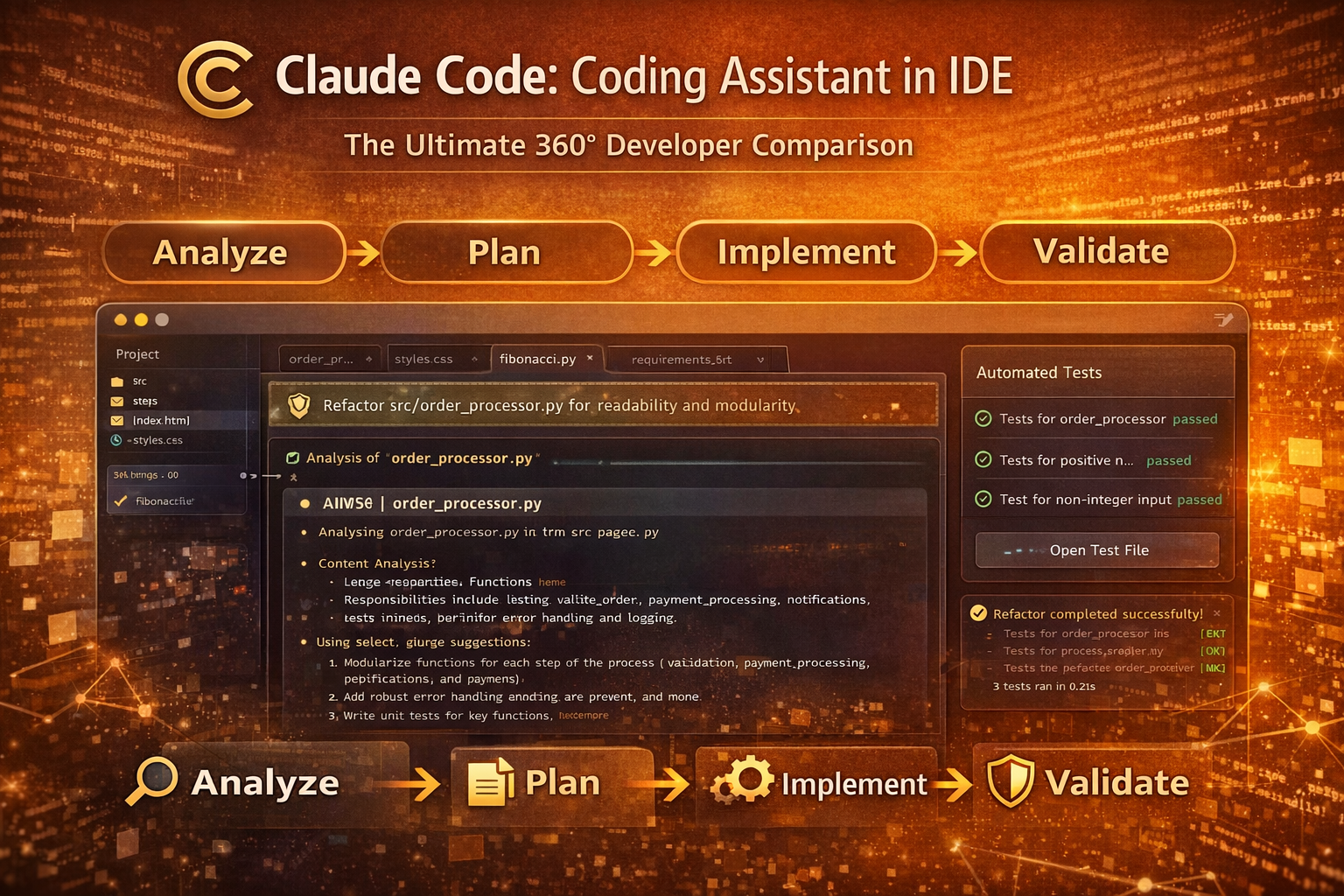
Claude Code is an AI coding agent focused on structured reasoning, long-context comprehension, and multi-step execution. It tends to behave more like a careful senior collaborator—planning first, then coding.
Core Strengths
- Better multi-file understanding and codebase-level reasoning
- Stronger architectural planning and maintainable implementations
- More consistent output structure (docs, checks, edge cases)
- Excellent for refactors, migrations, and “long-horizon” engineering tasks
3) 360° Feature Comparison (Codex vs Claude Code)
Both tools can write code, debug, and assist in workflows. The difference is how they behave under pressure: speed vs structure, short tasks vs long-horizon reasoning, and prototype output vs maintainable systems.
| Category | OpenAI Codex | Claude Code |
|---|---|---|
| Reasoning | Fast, practical, direct outputs | Deeper, structured, multi-step planning |
| Speed | Typically faster for snippets & prototypes | Slightly slower but more precise |
| Code Quality | Good, sometimes needs cleanup | Often cleaner, more maintainable structure |
| Large Codebases | Strong with clear prompts & scoped context | Excellent multi-file reasoning & dependency awareness |
| Agent Autonomy | Great for rapid execution tasks | Better for long-horizon orchestration |
| Integrations | Often excellent in IDE/chat workflows | Strong in terminal-first, repo-first workflows |
| Security Style | Effective but needs review | More defensive coding & checks by default |
| Cost | Often more token-efficient for small tasks | May use more tokens due to detailed reasoning |
Visual to Add Here (Optional)
Add a side-by-side infographic: Codex = Speed vs Claude = Structure. Great for boosting time-on-page and shareability.
4) Best Use Cases (Who Should Use What?)
Best for Rapid Prototyping & MVPs
If you’re building quickly—landing pages, APIs, scripts, or feature skeletons—OpenAI Codex is often the best fit. It produces usable code fast and helps you iterate at high speed.
Best for Large Systems & Long-Horizon Tasks
If you’re working in a large repo, refactoring legacy code, or designing architecture, Claude Code shines. It tends to plan more carefully, handle edge cases, and keep code maintainable.
Best for Solo Developers
- Codex if you want speed, quick drafts, and low friction.
- Claude Code if you want structured guidance and production-quality patterns.
5) Performance on Large Codebases
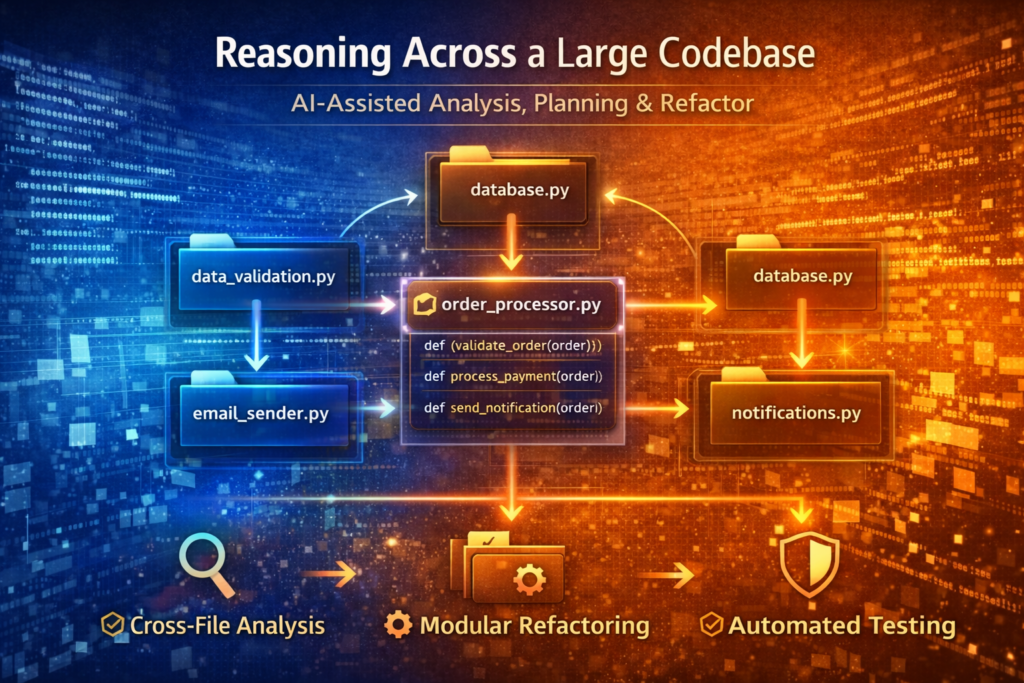
Large codebases are where most AI tools reveal their limits. Multi-file refactors, dependency chains, and architectural consistency require more than autocomplete.
- Claude Code tends to perform better at cross-file reasoning and maintaining consistent patterns.
- Codex can still be excellent—especially when you scope tasks clearly and provide the right context.
6) Security, Safety & Compliance
AI-generated code must be reviewed—especially for authentication, payment flows, data handling, and production deployments. Both tools can generate secure code, but their defaults differ.
- Claude Code: typically adds more validation, checks, and defensive patterns.
- Codex: fast and effective, but may require stronger manual security review in critical paths.
Best practice: Always run static analysis (SAST), dependency checks, and tests before merging AI-generated code.
7) Cost, Tokens & Efficiency
Cost depends on the product tier, usage patterns, and token consumption. In general:
- Codex can be more token-efficient for small, repetitive tasks.
- Claude Code may use more tokens due to more detailed reasoning and planning.
Cost-Smart Workflow Tip
Use Claude Code for one strong architecture pass, then use Codex for implementation bursts. This reduces expensive rework and keeps token usage practical.
8) Pros & Cons (At a Glance)
OpenAI Codex
Pros
- Fast generation for prototypes, scripts, utilities
- Great developer experience for quick iteration
- Often more token-efficient on smaller tasks
Cons
- May require more cleanup for maintainability
- Less structured planning by default
Claude Code
Pros
- Deeper reasoning and multi-step planning
- Often outputs cleaner, more maintainable code
- Excellent for large codebases and refactors
Cons
- Can be slower due to deliberation
- May use more tokens due to detailed reasoning
9) FAQ: Codex vs Claude Code
Is Claude Code better than OpenAI Codex?
For complex projects, architecture, and large codebases, Claude Code is often stronger. For quick prototyping and speed, Codex can feel better day-to-day.
Which AI coding assistant is best in 2026?
The best tool depends on your workflow. Teams often benefit from using both: one for planning (Claude) and one for execution (Codex).
Can I use both together?
Yes—and it’s a powerful strategy. Use Claude for high-level design and risk checks, then use Codex to generate implementation quickly, followed by tests and review.
10) Final Verdict (2026)
There is no single “winner” because these tools optimize different tradeoffs: Codex leans toward speed and iteration; Claude Code leans toward deep reasoning and maintainability.
Choose OpenAI Codex if you want:
- Fast prototypes and feature scaffolding
- Quick scripts and utility generation
- Cost-efficient iteration
Choose Claude Code if you want:
- Stronger long-context understanding
- Better architecture and maintainable outputs
- More careful multi-step reasoning
SEO Keywords (Targeted)
Use these keywords naturally in your title, headings, meta description, and image alt text:
- OpenAI Codex vs Claude Code
- best AI coding assistant 2026
- Claude Code review
- Codex coding agent
- AI programming assistant comparison
- Anthropic vs OpenAI coding tools
- AI code generation tool
- AI developer productivity tools
- AI for large codebases
- AI code quality and maintainability
Want a Matching Featured Image + Infographics?
If you want, I can generate: (1) a featured image, and (2) two infographics (1080×1080 and 1080×1920), plus Google Gemini prompts for each—aligned with your brand style.
Tip: After publishing, add internal links to your related AI tools articles and a short “Updated in 2026” note to improve SEO freshness.
💼 Build Your AI-Powered Income
Turn your ideas into income with these bestselling guides:



🌟 Ready to Build Your AI Income Stream?
You’ve learned the tools — now master the strategies!
Explore our exclusive AI Side Hustle & Passive Income eBooks to start earning smarter with ChatGPT, Canva, and automation tools.
🚀 Connect with SmartAIEarn
Join our growing AI and digital innovation community — explore smarter tools, automation hacks, and new income ideas that help you earn more, work less, and scale fast.



















What do you think?
Show comments / Leave a comment