

The photography industry is undergoing a significant transformation, with AI technology revolutionizing the way photographers work and earn. Did you know that the global stock photo market is projected to grow substantially, driven by the increasing demand for high-quality visual content?
This shift presents a lucrative opportunity for photographers to leverage AI tools to generate stock photos and tap into this growing market, earning royalties online. By embracing this innovative approach, photographers can expand their creative horizons and unlock new revenue streams.
Key Takeaways
- Leverage AI technology to generate high-quality stock photos.
- Tap into the growing demand for visual content in the global stock photo market.
- Unlock new revenue streams by selling your photos online.
- Expand your creative possibilities with AI-powered photography tools.
- Stay ahead of the curve in the evolving photography industry.
Understanding the AI Stock Photo Revolution
The rise of AI in stock photography is changing the game, enabling the creation of high-quality, royalty-free images on demand. This shift is not just about technology; it’s about the new opportunities and challenges it presents to photographers, businesses, and consumers.
How AI Has Transformed Stock Photography
AI has dramatically altered the landscape of stock photography by making it possible to generate images quickly and efficiently. Traditional stock photography relied heavily on human photographers, models, and extensive post-production work. In contrast, AI-generated images can be created with specific prompts, reducing the need for physical resources and speeding up the production process.
This transformation has democratized access to high-quality images, allowing businesses of all sizes to access professional-grade visuals without the hefty price tag associated with traditional stock photography.
The Growing Market for AI-Generated Images
The demand for AI-generated images is on the rise, driven by the need for unique, customizable, and cost-effective visual content. Businesses are increasingly looking for images that can be tailored to their specific marketing needs, and AI-generated stock photos fit the bill.
According to recent trends, the market for AI-generated content, including stock photos, is expected to grow significantly in the coming years. This growth is fueled by advancements in AI technology and the increasing acceptance of AI-generated content across industries.
Current Industry Trends and Forecasts
The stock photography industry is witnessing a shift towards AI-generated content, with major platforms beginning to accept and promote AI-generated images. This trend is expected to continue, with forecasts suggesting a substantial increase in the use of AI-generated stock photos.
- Increased adoption of AI technology in creative industries
- Growing demand for customizable stock images
- Expansion of AI-generated content across major stock photo platforms
As the industry continues to evolve, understanding these trends and adapting to the changing landscape will be crucial for photographers, businesses, and consumers looking to leverage the benefits of AI-generated stock photos for online royalty earnings.
The AI Stock Photo Hustle | Earn Royalties Online Opportunity
With the rise of AI in photography, the potential for generating passive income has never been more accessible. The artificial intelligence photo marketplace is transforming the way we think about stock photography, making it easier for creators to monetize their work.
Realistic Income Potential and Case Studies
The income potential from AI-generated stock photos is substantial. According to recent case studies, some stock contributors using AI images report earning between $500 to $1,500 per month in passive royalties. This range varies based on factors such as the quality of the images, the demand for specific content, and the platforms used to sell the photos.
| Income Range | Number of Contributors | Average Monthly Earnings |
|---|---|---|
| $0 – $500 | 20 | $250 |
| $500 – $1,000 | 15 | $750 |
| $1,000 – $1,500 | 10 | $1,250 |
| $1,500+ | 5 | $1,750 |
Low Barrier to Entry Compared to Traditional Photography
One of the most significant advantages of the AI stock photo hustle is its low barrier to entry. Unlike traditional photography, which requires expensive equipment and extensive training, creating AI-generated stock photos requires minimal initial investment. This accessibility opens up opportunities for a broader range of creators to participate in the market.
Scalability of AI-Generated Content
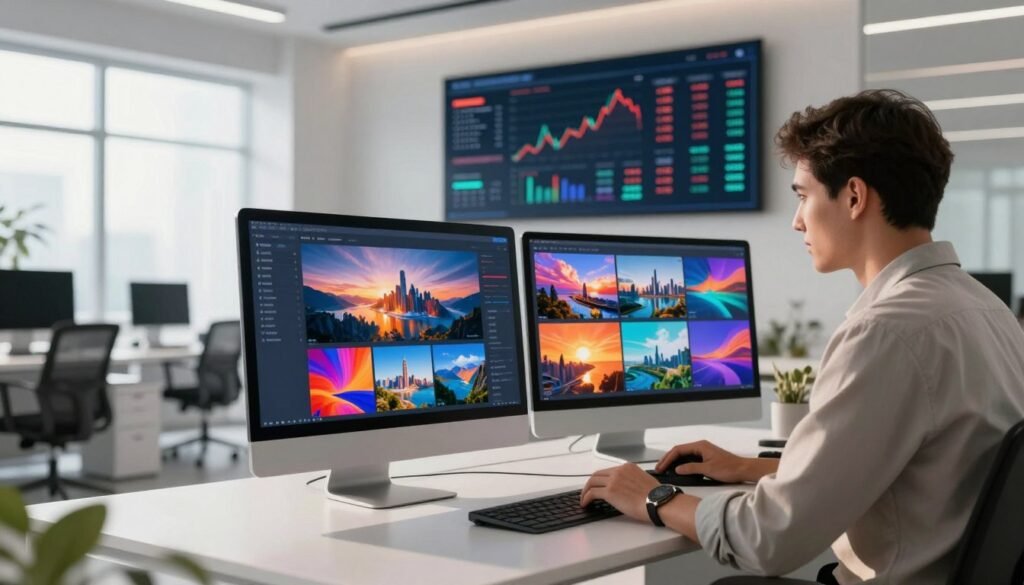
The scalability of AI-generated content is another key benefit. Once an AI model is trained, it can produce a high volume of images with minimal additional effort. This scalability allows creators to produce a large portfolio of work, increasing their chances of earning passive income through royalties.
As the artificial intelligence photo marketplace continues to evolve, the opportunities for generating passive income from photos will likely expand. By understanding the potential income, the low barrier to entry, and the scalability of AI-generated content, creators can better position themselves to succeed in this emerging market.
Essential Tools for Creating AI Stock Photos
Unlocking the potential of AI stock photos begins with understanding the key tools at your disposal. To create high-quality, marketable AI-generated images, you’ll need to familiarize yourself with the latest AI image generation platforms, image editing software, and the hardware that supports these tools.
Top AI Image Generation Platforms
The AI stock photo landscape is dominated by several powerful image generation platforms. Midjourney, DALL-E, and Stable Diffusion are among the most popular choices, each offering unique features and capabilities.
- Midjourney: Known for its artistic style and ability to generate complex compositions.
- DALL-E: Offers a wide range of generation capabilities, from realistic to abstract images.
- Stable Diffusion: Provides a high degree of control over the generation process and image quality.
Image Editing Software for Refinement
While AI generation platforms can produce impressive images, refining these images is often necessary to meet stock photo standards. Adobe Photoshop remains the industry standard for image editing, offering a wide range of tools for enhancing and manipulating AI-generated images.
Hardware and Subscription Cost Considerations
The hardware required to run AI image generation software effectively can vary significantly. A powerful GPU is essential for faster image generation, while sufficient RAM and storage are necessary for handling large image files.
| Tool | Primary Use | Cost Consideration |
|---|---|---|
| Midjourney | AI Image Generation | Subscription-based |
| DALL-E | AI Image Generation | API access fees |
| Stable Diffusion | AI Image Generation | Open-source, hardware costs |
| Adobe Photoshop | Image Editing | Subscription-based |
By leveraging these essential tools and understanding their associated costs, creators can maximize their stock image royalties and digital asset revenue. Whether you’re just starting out or looking to refine your existing workflow, investing in the right combination of AI generation platforms, editing software, and hardware will be crucial to your success in the AI stock photo market.
Mastering AI Prompts for Marketable Stock Photos
Generating high-quality stock photos with AI starts with well-crafted prompts. The effectiveness of your AI-generated stock photos largely depends on how well you can instruct the AI. This involves understanding the nuances of prompt engineering and how to apply them to create commercial-grade images.
Prompt Engineering Basics for Commercial Images
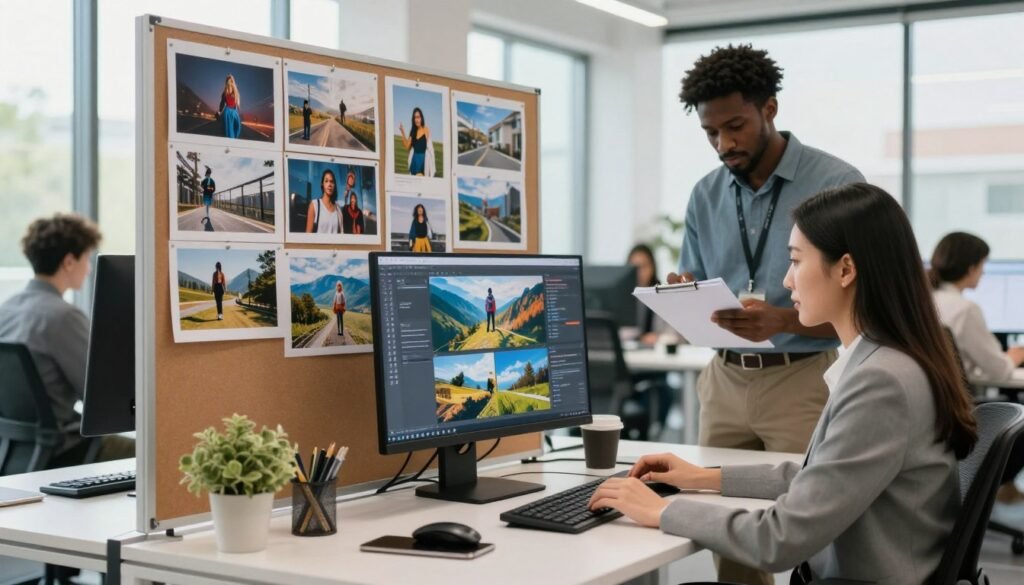
To create marketable stock photos, you need to understand the basics of prompt engineering. This includes being specific with your descriptions, using relevant keywords, and understanding the AI model’s capabilities. For instance, when generating a stock photo of a business professional, your prompt might include details like “confident businesswoman standing in front of a city skyline” to give the AI enough context to produce a relevant image.
Key elements of effective prompts include:
- Specificity: Clearly define what you want the image to depict.
- Relevance: Use keywords that are relevant to the stock photo category.
- Context: Provide enough context for the AI to understand the scene or subject.
Creating Consistent Style and Quality
Consistency is key when it comes to stock photography. To achieve a consistent style and quality, you need to refine your prompts and possibly use the same AI model settings across your projects. This ensures that your images have a uniform look, making them more recognizable and professional.
Tips for achieving consistency include:
- Using a consistent tone and style in your prompts.
- Selecting a specific AI model or version that produces your desired output.
- Adjusting parameters like lighting, color palette, and composition to match your brand or client’s requirements.
Niche-Specific Prompt Strategies That Sell
Different niches require different strategies when it comes to AI prompts. For example, prompts for healthcare might focus on diverse groups of people interacting, while prompts for technology might emphasize futuristic elements and innovative devices.
| Niche | Prompt Strategy | Example Prompt |
|---|---|---|
| Healthcare | Emphasize diversity and interaction | “Diverse group of healthcare professionals collaborating” |
| Technology | Focus on futuristic elements | “Futuristic cityscape with neon lights and flying drones” |
| Business | Highlight professionalism and modern settings | “Business professional working on a laptop in a modern office” |
By mastering AI prompts and understanding the specific needs of different niches, you can significantly improve your chances of success in the automated stock photo sales market.
Legal Considerations for AI-Generated Stock Photos
As the AI stock photo hustle gains momentum, understanding the legal landscape is crucial for success. Creators must navigate a complex web of regulations to ensure their AI-generated images are legally sound and commercially viable.
Copyright and Ownership Issues
One of the most pressing legal concerns in AI-generated stock photography is copyright and ownership. Who owns the rights to an image created by an AI algorithm? The answer varies depending on the jurisdiction and the specific circumstances of the image’s creation. In the United States, for instance, the Copyright Office has stated that it will not grant copyrights for works created solely by machines without human input.
This raises important questions for those involved in the AI stock photo hustle. Can AI-generated images be copyrighted if they are based on human-created prompts or inputs? The legal landscape is still evolving, and creators must stay informed about the latest developments.
“The law is clear that copyright cannot be granted to works created solely by machines without human input,” said the U.S. Copyright Office. This stance has significant implications for AI-generated stock photos and the royalties they can earn.
Model Releases and Likeness Rights
Another critical legal consideration is the need for model releases and likeness rights. When AI-generated images feature recognizable individuals or property, obtaining the necessary releases is essential to avoid legal complications. Failure to secure proper releases can result in costly lawsuits and damage to one’s reputation in the industry.
- Understand when model releases are required
- Know how to obtain releases for AI-generated images
- Be aware of the legal implications of using recognizable likenesses without permission
Platform-Specific Terms of Service
Finally, creators must be aware of the terms of service for the platforms they use to sell their AI-generated stock photos. Different stock photo websites and marketplaces have varying policies regarding AI-generated content, royalty-free images, and the rights of contributors. Carefully reviewing these terms is crucial to maintaining compliance and maximizing earnings.
| Platform | AI Content Policy | Royalty Structure |
|---|---|---|
| Shutterstock | Allows AI-generated content with certain restrictions | 15%-40% royalty rate depending on contributor status |
| Adobe Stock | Permits AI-generated content, requires contributor agreement | 33% royalty rate for most contributors |
By understanding and adhering to these legal considerations, creators can successfully navigate the AI stock photo hustle and earn royalties online while minimizing legal risks.
Top Platforms to Sell Your AI Stock Photos
Earning passive income from photos is now more accessible than ever, thanks to the rise of AI stock photo marketplaces. As AI-generated images become increasingly popular, various platforms have emerged to cater to this new trend.
Traditional Stock Sites Accepting AI Content
Many traditional stock photo sites have begun to accept AI-generated content, expanding their portfolios and offering new opportunities for creators. Some of the notable platforms include:
- Shutterstock: Known for its vast collection, Shutterstock now accepts AI-generated images, providing a significant marketplace for creators.
- Adobe Stock: As a major player in the stock photo industry, Adobe Stock has also opened its doors to AI-generated content, integrating it seamlessly with its popular creative tools.
- Getty Images: While more selective, Getty Images has started to include AI-generated images in their collection, signaling a shift towards embracing new technologies.

AI-Specific Marketplaces
In addition to traditional stock sites, AI-specific marketplaces have emerged, catering specifically to AI-generated content. These platforms offer unique opportunities for creators to showcase their work:
- NightCafe: Known for its AI image generation capabilities, NightCafe also provides a marketplace for creators to sell their AI-generated art.
- Leonardo.AI: This platform is dedicated to AI-generated content, offering a space for artists to showcase and sell their work.
Commission Structures and Payment Methods
Understanding the commission structures and payment methods of these platforms is crucial for maximizing online royalty earnings. Here’s a comparison:
| Platform | Commission Rate | Payment Methods |
|---|---|---|
| Shutterstock | 15%-40% | PayPal, Bank Transfer |
| Adobe Stock | 33% | PayPal, Bank Transfer |
| NightCafe | Varies | Credit/Debit, Crypto |
| Leonardo.AI | Varies | Credit/Debit, Crypto |
By understanding these platforms and their structures, creators can make informed decisions about where to sell their AI stock photos, maximizing their passive income from photos.
Pricing Strategies for Maximum Royalties
The key to unlocking maximum royalties lies in adopting the right pricing strategy for your AI stock photos. In the burgeoning artificial intelligence photo marketplace, understanding how to price your content effectively can make a significant difference in your earnings.
Understanding Royalty Structures
Royalty structures in stock photography refer to the percentage of the sale price that contributors earn for each image sold. Different platforms have varying royalty rates, typically ranging from 15% to 45%. For instance, some popular stock photo sites offer higher royalty rates for exclusive content or for contributors who reach certain milestones.
To maximize stock image royalties, it’s essential to understand these structures and choose platforms that offer the best rates for your type of content. Some platforms also offer bonuses or increased royalties for high-demand images, which can further boost your earnings.
Exclusive vs. Non-Exclusive Licensing
One crucial decision you’ll face as an AI stock photo contributor is whether to license your images exclusively or non-exclusively. Exclusive licensing means granting a single platform the sole right to sell your image, potentially leading to higher royalties but limiting your distribution channels.
Non-exclusive licensing, on the other hand, allows you to distribute your images across multiple platforms, potentially increasing your overall sales volume. However, this may dilute your earnings per image if the same image is widely available across different sites.
Volume vs. Premium Pricing Models
Pricing models can significantly impact your royalty earnings. The volume pricing model focuses on selling a high number of images at lower prices, relying on the law of large numbers to generate substantial income. This strategy works well for contributors who can produce a large volume of marketable AI-generated content.
In contrast, the premium pricing model involves selling fewer, high-quality images at premium prices. This strategy requires creating unique, highly sought-after content that justifies higher pricing. Understanding your target market and the demand for specific types of images can help you choose the most effective pricing model.
By carefully considering these pricing strategies and adapting them to your strengths as an AI stock photo contributor, you can optimize your earnings in the artificial intelligence photo marketplace.
Building Your AI Stock Photo Portfolio
Building a successful AI stock photo portfolio requires a strategic approach to curating your work. As the market for AI-generated images continues to grow, having a well-organized portfolio is crucial for maximizing your digital asset revenue and succeeding in automated stock photo sales.
Quantity vs. Quality Considerations
When it comes to building your AI stock photo portfolio, one of the key decisions you’ll face is whether to prioritize quantity or quality. While having a large volume of images can increase your chances of sales, it’s equally important to maintain a high standard of quality to attract and retain customers.
A balanced approach is often the most effective strategy. This involves uploading a consistent stream of high-quality images while ensuring that your portfolio doesn’t become too diluted. Consider maintaining a core collection of premium images and supplementing it with additional content that aligns with current market trends.

Creating Cohesive Collections and Series
Organizing your AI stock photos into cohesive collections and series can significantly enhance your portfolio’s appeal. This approach allows potential buyers to browse through themed content, increasing the likelihood of sales. Consider creating collections based on popular themes, seasonal content, or industry-specific imagery.
To create a successful series, focus on developing a consistent visual style or narrative thread. This could involve using similar color palettes, composition techniques, or subject matter. By doing so, you can establish a recognizable brand identity within your portfolio.
Analyzing Market Demand for Portfolio Direction
Understanding market demand is crucial for directing your AI stock photo portfolio towards success. Analyze current trends, popular search terms, and customer preferences to identify gaps in the market that your content can fill.
| Market Demand Indicator | Description | Portfolio Adjustment |
|---|---|---|
| Popular Search Terms | Identify frequently searched keywords on stock photo platforms | Create content that matches these search terms |
| Industry Trends | Stay updated on the latest industry developments and themes | Develop themed collections or series based on trending topics |
| Customer Preferences | Analyze customer feedback and purchasing patterns | Adjust your content strategy to meet customer demands |
By regularly analyzing market demand and adjusting your portfolio accordingly, you can ensure that your AI stock photo portfolio remains relevant and competitive in the ever-evolving market of automated stock photo sales.
Marketing Your AI-Generated Stock Photos
To succeed in the AI stock photo hustle, effective marketing is crucial. As the market for AI-generated images continues to grow, standing out from the competition requires a strategic approach to promoting your work.
Keyword Optimization and Metadata Strategies
One of the most critical aspects of marketing your AI stock photos is optimizing them with relevant keywords. This involves understanding what potential buyers are searching for and incorporating those terms into your image titles, descriptions, and metadata. Effective keyword research can significantly improve your image’s visibility in search results.
When crafting metadata, consider using a mix of niche-specific terms and broader keywords that capture the essence of your image. For instance, if you’ve created an AI-generated photo of a “cityscape at sunset,” your keywords might include “urban landscape,” “sunset,” “skyscrapers,” and “modern architecture.”
Social Media Promotion Techniques
Social media platforms offer a powerful channel for promoting your AI stock photos. Instagram and Pinterest are particularly effective for visual content, allowing you to showcase your images to a broad audience. To maximize your reach, use relevant hashtags, engage with your followers by responding to comments, and post content regularly.
Another strategy is to join stock photography groups or communities on platforms like Facebook or LinkedIn. These groups can provide valuable feedback on your work and help you stay updated on industry trends.
Building a Personal Brand as an AI Artist
Establishing a personal brand can differentiate you from other AI stock photo creators. This involves developing a consistent style or niche that becomes associated with your work. Consistency is key; regularly producing high-quality images that fit within your brand’s aesthetic will help attract a loyal following.
Consider creating a professional website or portfolio that showcases your AI-generated stock photos. This not only provides a centralized location for potential buyers to view your work but also enhances your credibility as an AI artist.
Overcoming Common AI Stock Photo Challenges
Navigating the world of AI-generated stock photos comes with its own set of hurdles that photographers must overcome. As the market continues to evolve, understanding these challenges is crucial for success.

Dealing with Platform Rejections
One of the significant challenges faced by AI stock photo creators is dealing with rejections from stock photo platforms. These rejections can occur due to various reasons such as low image quality, copyright issues, or failure to meet the platform’s content guidelines. To minimize rejections, it’s essential to understand the specific requirements of each platform and ensure that your AI-generated images meet these standards.
For instance, some platforms may have strict guidelines regarding the use of AI-generated content, while others may be more lenient. Familiarizing yourself with these guidelines can significantly reduce the likelihood of rejection.
Maintaining Uniqueness in a Crowded Market
The AI stock photo market is becoming increasingly saturated, making it challenging for creators to stand out. To maintain uniqueness, focus on developing a distinct style or niche that sets your work apart from others. This could involve creating images that cater to specific industries or themes that are currently underrepresented in the market.
Additionally, staying up-to-date with the latest trends and consumer demands can help you create relevant and unique content that resonates with buyers. Utilizing keyword research tools can also aid in identifying gaps in the market and opportunities to create royalty-free images that are in high demand.
Adapting to AI Platform Changes and Updates
AI image generation platforms are continually evolving, with regular updates and changes that can impact the quality and style of the generated images. To overcome this challenge, it’s crucial to stay informed about the latest developments in AI technology and adjust your workflow accordingly.
Participating in community forums and following industry news can provide valuable insights into upcoming changes and how to adapt your strategy to maximize online royalty earnings. Being flexible and willing to learn new techniques is key to thriving in this dynamic environment.
By understanding and addressing these common challenges, AI stock photo creators can better navigate the industry and improve their chances of success in the competitive market of royalty-free images.
Conclusion: Your Path to AI Stock Photo Success
As the AI stock photo market continues to evolve, it’s clear that artificial intelligence is transforming the way photographers and artists earn passive income from photos. By leveraging AI image generation platforms and understanding the artificial intelligence photo marketplace, you can unlock new revenue streams and diversify your income.
The potential for earning royalties online through AI-generated stock photos is vast, with opportunities available on various platforms, from traditional stock sites like Shutterstock and Adobe Stock to AI-specific marketplaces. By mastering AI prompts, refining your image editing skills, and optimizing your portfolio, you can capitalize on this growing market.
To succeed, focus on creating high-quality, marketable content, and stay up-to-date with industry trends and platform updates. With persistence and creativity, you can establish a successful presence in the AI stock photo market and enjoy the benefits of passive income from your AI-generated photos.
FAQ
What is the AI stock photo hustle, and how can I earn royalties online?
How has AI transformed the stock photography industry?
What are the benefits of selling AI-generated stock photos compared to traditional photography?
What are the essential tools needed for creating AI stock photos?
How do I craft effective AI prompts for generating marketable stock photos?
What are the legal considerations when creating and selling AI-generated stock photos?
Where can I sell my AI-generated stock photos?
How do I price my AI-generated stock photos to maximize royalties?
How can I build a successful AI stock photo portfolio?
How can I market my AI-generated stock photos to attract buyers?
What are the common challenges faced by photographers selling AI stock photos, and how can I overcome them?
Can I earn passive income from selling AI-generated stock photos?
Build Smarter Content Systems with Practical Mini-Guides
Short, actionable digital guides designed to help creators, bloggers, affiliate marketers, and online business owners learn faster, take action sooner, and grow with more clarity.

Pinterest Excellence Playbook
Evergreen traffic + Pinterest SEO. A practical Pinterest growth blueprint covering platform positioning, profile SEO, branding consistency, content planning, pin design, publishing cadence, analytics, monetization, and weekly execution.
View Guide
Google Web Story Excellence Playbook
Visual SEO + mobile traffic. A complete mini guide for planning, designing, optimizing, publishing, and monetizing Google Web Stories that can rank in Search and Google Discover.
View Guide
YouTube Excellence Playbook
Channel growth + SEO system. A practical YouTube growth blueprint covering channel strategy, branding, content planning, YouTube SEO, asset dimensions, analytics, engagement, technical quality, monetization, safety, and weekly workflow.
View Guide
Instagram Excellence Playbook
Profile growth + engagement. A complete Instagram growth blueprint covering profile optimization, content strategy, posting system, SEO, engagement, and monetization.
View Guide
Facebook Excellence Playbook
Reach + content strategy. A complete Facebook growth blueprint covering page positioning, branding, content planning, posting strategy, SEO, analytics, engagement, monetization, and compliance.
View Guide🚀 Want More Practical Digital Resources?
Explore SmartResourceVault for AI prompts, templates, planners, trackers, mini-guides, audio resources, and bundles built for faster execution and everyday growth.
📘 Browse Mini Guides »💼 Build Your AI-Powered Income
Turn your ideas into income with these bestselling guides:



🌟 Ready to Build Your AI Income Stream?
You’ve learned the tools — now master the strategies!
Explore our exclusive AI Side Hustle & Passive Income eBooks to start earning smarter with ChatGPT, Canva, and automation tools.